
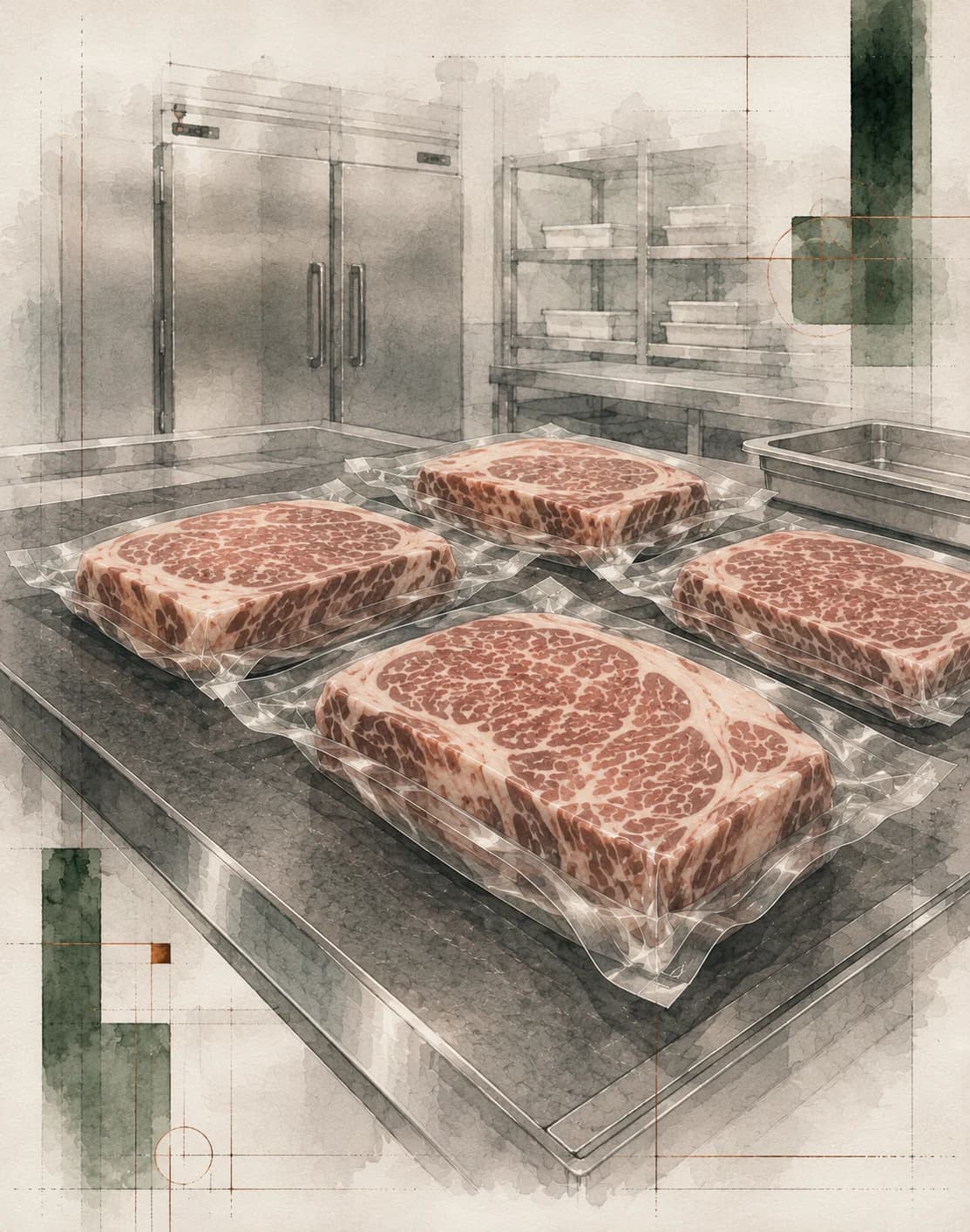
A5 Japanese Wagyu is one of the strongest terms in premium beef. For many buyers, it signals the highest grade, intense marbling, and a luxury eating experience.
For importers, distributors, chefs, retailers, and foodservice operators, however, A5 should not be treated as a simple marketing label. It is a formal Japanese beef grade. Understanding what the grade measures helps buyers write better specifications, compare offers more accurately, and avoid disappointment after the product arrives.
This guide explains what A5 actually means, how the BMS marbling scale fits into the grade, and what B2B buyers should confirm before sourcing Japanese Wagyu.
Key Takeaways
- A5 is a formal Japanese beef grade, not a regional brand name.
- The letter refers to yield grade, while the number refers to meat quality grade.
- A5 Wagyu normally covers BMS 8-12, so A5 alone is not a precise marbling specification.
- The grade is assigned to the carcass, not separately to every individual cut.
- B2B buyers should confirm BMS, cut, format, documentation, destination, and intended use before comparing quotes.
A5 is a grade, not a brand
A5 is part of the Japanese beef grading system used by the Japan Meat Grading Association. The grade has two parts:
- The letter, A, B, or C, refers to yield.
- The number, 1 to 5, refers to meat quality.
So A5 means the carcass received the highest yield grade and the highest quality grade. It does not mean the beef comes from a specific regional brand such as Kobe, Matsusaka, Omi, Miyazaki, or Kagoshima. Those names are separate brand or origin designations with their own criteria.
For B2B buyers, this distinction matters. A supplier may offer A5 Japanese Wagyu, but the commercial value of that offer depends on more than the headline grade. Cut, BMS level, origin documentation, format, logistics, and intended use all matter.
For a deeper overview of the grading system, see our Japanese Wagyu grades guide.
What the A means: yield grade
The letter in A5 is the yield grade. It estimates how much usable meat a carcass produces relative to carcass weight.
Yield grade | Meaning |
|---|---|
A | Above-standard yield |
B | Standard yield |
C | Below-standard yield |
For buyers purchasing individual cuts, the yield grade is usually less important than the quality grade, cut specification, and marbling level. A B5 carcass can still have excellent eating quality if the meat quality score is 5. However, in export and wholesale markets, A5 remains the most recognized and marketable designation.
What the 5 means: quality grade
The number in A5 is the quality grade. This is based on four factors:
Quality factor | What it evaluates |
|---|---|
Marbling | Amount and distribution of intramuscular fat |
Meat color and brightness | Visual appearance of the lean meat |
Firmness and texture | Structure and fineness of the muscle |
Fat color and quality | Color and appearance of the fat |
A key point for buyers: the final quality grade is limited by the lowest of these factors. In other words, a carcass does not become Grade 5 because marbling is high alone. The other quality factors must also meet the standard.
This is why buyers should not rely only on the phrase A5. When possible, ask for the grading certificate or supporting details, including BMS, meat color, fat color, and other sub-scores.
BMS: the number buyers should understand
The Beef Marbling Standard, usually called BMS, is the marbling scale used in Japanese beef grading. It runs from 1 to 12.
For A5 Wagyu, the BMS range is 8 to 12. This is important because A5 is not a single marbling level. An A5 BMS 8 product and an A5 BMS 12 product can both be legitimate A5 Japanese Wagyu, but they may feel very different on the plate.
Grade | Typical BMS range | Buyer implication |
|---|---|---|
A5 | BMS 8-12 | Ultra-premium, but still a wide range |
A4 | BMS 5-7 | Strong marbling with potentially better value |
A3 | BMS 3-4 | Premium entry-level for broader menus |
If your program depends on a very specific eating experience, A5 alone may not be precise enough. A high-end steakhouse, luxury retail program, or gifting product may want to specify A5 with a minimum BMS level, such as BMS 10 or higher. A restaurant focused on balance, yield, or repeatability may find A4 or lower-BMS A5 more practical.
The grade is assigned to the carcass, not every individual cut
Another common misunderstanding is that the grade applies equally to every piece of meat from the animal.
Japanese beef grading is performed at a specific carcass cross-section. That grade represents the carcass, not a separate test of every ribeye, striploin, tenderloin, chuck, round, or trim item.
This matters in B2B purchasing because different cuts naturally perform differently. A5 ribeye and A5 tenderloin will not look or eat the same. Non-loin cuts from an A5 carcass can still be valuable, but they may need a different menu application, slice thickness, cooking method, or price position.
For cut planning, see our Wagyu cuts guide.
What A5 does not tell you
A5 is useful, but it does not answer every commercial question. It does not automatically tell you:
- which cut is best for your menu or retail case
- whether the product is chilled or frozen
- whether the shipment timing fits your launch schedule
- whether the source facility is suitable for your destination market
- whether the marbling level is BMS 8 or BMS 12
- whether the product is ideal for steak, yakiniku, shabu-shabu, sukiyaki, or gifting
This is why a strong sourcing inquiry should combine grade with practical details: cut, quantity, format, destination, timing, documentation needs, and flexibility.
If you are preparing a request, our buyer FAQ may help.
Documentation and traceability matter
For Japanese Wagyu, buyers should expect clear documentation. Depending on the transaction and destination market, relevant documents may include grading information, individual cattle identification, health certificates, export-related paperwork, and supplier-provided product specifications.
Japan also has a cattle traceability system based on individual identification numbers. This helps verify origin and animal history. For B2B buyers, traceability is not just a compliance detail. It supports customer trust, menu claims, retail storytelling, and internal quality control.
Before committing to a program, ask your supplier what documentation can be provided and how the product can be verified.
For export-related planning, see our Japanese Wagyu export guide.
How buyers should specify A5 Japanese Wagyu
A practical B2B specification should go beyond the words A5 Wagyu. A stronger inquiry might include:
- Grade: A5, A4, or acceptable alternatives
- Minimum BMS, if required
- Cut: ribeye, striploin, tenderloin, short plate, chuck, round, trim, or others
- Format: chilled or frozen
- Packaging and carton expectations
- Destination country or region
- Target delivery window
- Intended use: steakhouse, yakiniku, hot pot, retail, gifting, or wholesale
- Documentation requirements
- Flexibility on brand, cut, BMS, or timing
This level of detail helps suppliers respond with a quote that is actually workable. It also reduces the risk of comparing offers that look similar on paper but are not commercially equivalent.
The buyer takeaway
A5 Japanese Wagyu is the top recognized grade in Japan's beef grading system, but it is not a complete purchasing specification by itself.
For B2B buyers, the most important point is this: A5 tells you the carcass reached the highest yield and quality grade, but the buying decision still depends on BMS, cut, format, documentation, logistics, and the final use case.
If you are sourcing Japanese Wagyu for a restaurant, distributor, retailer, or foodservice program, start with the grade, then build a full specification around how the product will actually be sold and served.
To discuss Japanese Wagyu sourcing for your market, contact First Agri here.