
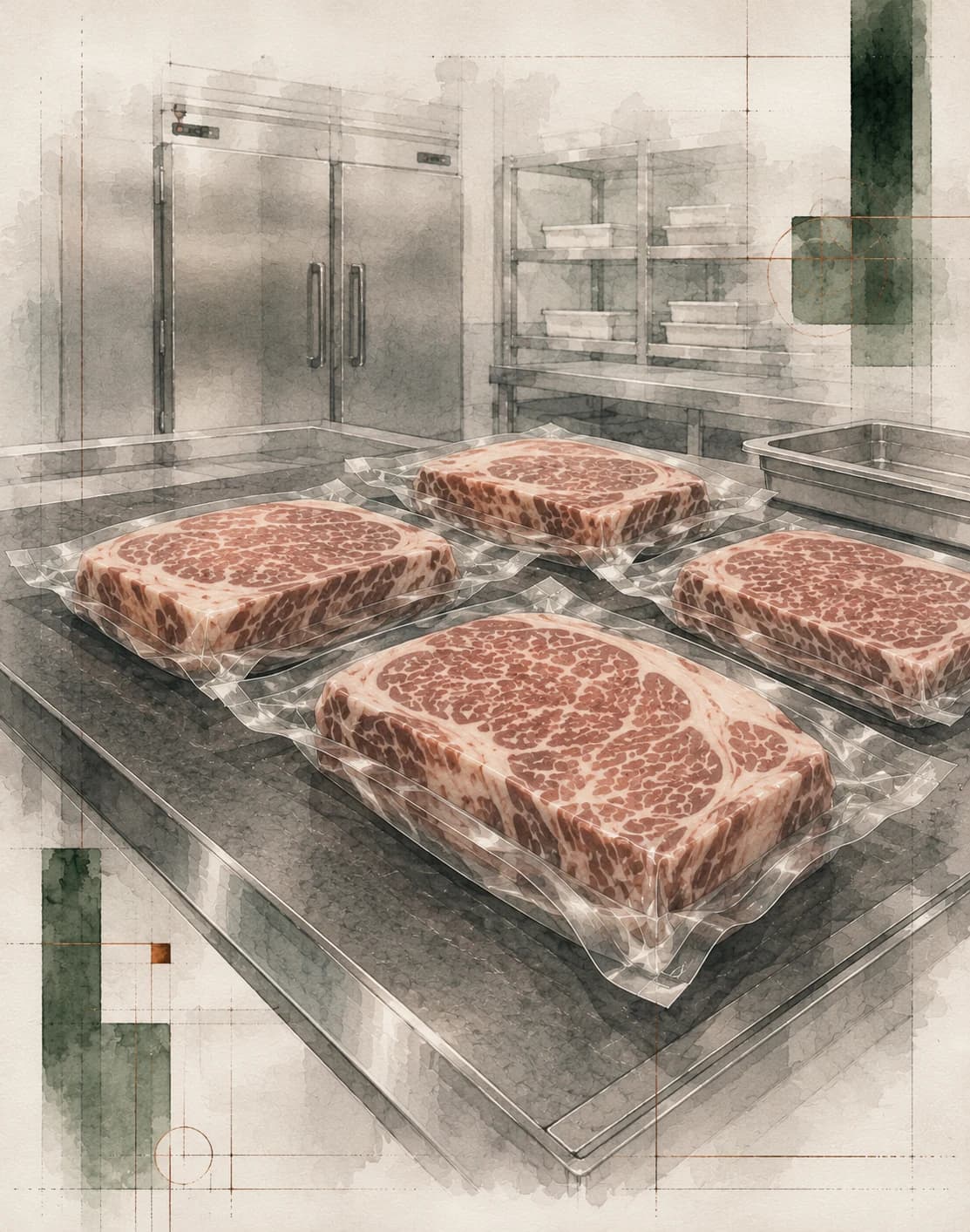
Japanese Wagyu buyers often ask a simple question: should we buy A3, A4, or A5?
The better question is: which grade fits the channel you are building?
A5 attracts attention because it is the headline grade. A4 often gives the best balance between marbling, price-performance, and repeat menu use. A3 can work as an accessible entry point for high-volume foodservice, retail trials, or customers who want Japanese Wagyu with a leaner eating profile.
This guide explains how A3, A4, and A5 Japanese Wagyu fit different B2B channels, including fine dining, retail, gifting, yakiniku, hot pot, and wholesale programs.
Key Takeaways
- A5 is the headline grade, but it is not automatically the best grade for every business model.
- A4 is often the most practical volume grade for restaurants, retail, yakiniku, hot pot, and wholesale programs.
- A3 can be useful for entry-level retail, high-volume foodservice, and buyers targeting a leaner profile.
- Gifting is the most A5-sensitive channel because presentation and perceived luxury matter heavily.
- Buyers should match grade with cut, format, portion size, documentation, and final use case before comparing quotes.
A3, A4, and A5 in plain terms
Japan's beef grading system combines a yield letter with a quality number. The letter, usually A for export products, refers to yield. The number, from 1 to 5, refers to meat quality.
For international Japanese Wagyu trade, the grades buyers most often discuss are A3, A4, and A5.
Grade | Typical BMS range | Commercial profile | Common buyer role |
|---|---|---|---|
A5 | BMS 8-12 | Very abundant marbling, premium positioning | Headline SKU, tasting-menu dish, luxury gift |
A4 | BMS 5-7 | Strong marbling with better price-performance | Volume workhorse for menus and retail |
A3 | BMS 3-4 | Lighter marbling, more beef-forward profile | Entry-level SKU or high-volume foodservice option |
For a deeper breakdown of the grading system, see our Japanese Wagyu grades guide.
Why channel fit matters more than the grade label alone
The same grade can perform very differently depending on how the product is sold or served.
A5 ribeye in a tasting menu may be a perfect luxury signal. The same A5 ribeye served as a large steak can feel too rich for some guests and difficult for operators to price profitably. A4 short plate may be ideal for yakiniku, while A4 striploin may work better for retail steak packs. A3 may be too lean for luxury gifting, but useful for high-volume menus where portion economics matter.
For B2B buyers, grade selection is not only a quality decision. It is a channel strategy decision.
Fine dining: A5 for signature dishes, A4 for menu structure
Fine-dining restaurants often use A5 as a signature ingredient. It delivers visual impact, a strong menu story, and the melt-in-mouth texture many guests associate with Japanese Wagyu.
However, many professional menus do not need every Wagyu course to be A5. A4 can act as the structural grade for a multi-course program because it still offers clear marbling while giving chefs more flexibility on portion size, cost, and repeat use.
Use case | Best-fit grade | Reason |
|---|---|---|
Tasting-menu centerpiece | A5, often higher BMS | Maximum visual and experiential impact |
Multi-course menu component | A4 or lower-BMS A5 | Better balance of richness and food cost |
Secondary cut feature | A4-A5 | Useful for zabuton, rib cap, top blade, and other high-value cuts |
Chefs should also think beyond striploin and ribeye. Secondary cuts such as chuck flat, rib cap, top blade, and short rib can produce strong results when matched with the right slicing and cooking method. For cut planning, see our Wagyu cuts guide.
Discuss fine-dining Wagyu specifications with First Agri.
Retail and D2C: A4 as accessible luxury
Retail buyers need a product that looks premium, cooks reliably at home, and fits a realistic consumer price point. This is why A4 is often the most practical retail volume grade.
A4 gives shoppers a visible step up from many domestic premium beef products while avoiding some of the portion and richness challenges of A5. A5 still belongs in the range, but often as a premium SKU, limited release, or special-occasion item.
A3 can also work as a gateway product for first-time Japanese Wagyu buyers. It gives customers access to Japan-origin Wagyu with a leaner profile and a lower price point.
Retail role | Suggested grade | Typical format |
|---|---|---|
Premium hero SKU | A5 | Giftable steak, premium sliced tray, limited release |
Volume retail SKU | A4 | Vacuum steak pack, sliced sukiyaki or shabu-shabu tray |
Entry SKU | A3 | Trial pack, thin slices, approachable steak cut |
For retail, traceability can also become part of the product value. The 10-digit cattle identification number, grading documentation, and Japanese-origin explanation help distinguish genuine Japanese Wagyu from domestic Wagyu-style or crossbred products.
Gifting: A5 is the safest premium signal
Gifting is the most grade-sensitive channel. Buyers in this category are not only buying beef. They are buying proof of luxury, presentation, and confidence.
For corporate gifts, holiday gifts, and premium consumer gift boxes, A5 is usually the safest specification. The product needs to look exceptional when opened, and the recipient may not understand the nuance between A4 and A5. The A5 label itself carries value in the gifting experience.
For this channel, packaging can matter as much as grade. A strong gifting program should consider:
- presentation box design
- portion format and tray layout
- clear grade and origin labeling
- traceability documentation or QR verification
- cold-chain packaging and delivery timing
- seasonal demand peaks and allocation planning
A4 may appear in value bundles, but standalone premium gifts are usually expected to sit at the A5 level.
Yakiniku: blend grades and prioritize cuts
Yakiniku is a cut-forward channel. Guests order multiple small portions, and the menu can carry several grades at the same time.
This makes yakiniku one of the best channels for grade blending. A5 can anchor the premium section. A4 can carry the core menu. A3 may work for approachable sets, high-volume items, or value tiers when positioned carefully.
Yakiniku menu role | Grade fit | Examples |
|---|---|---|
Premium upsell | A5 | Sirloin, tenderloin, chateaubriand, premium tasting set |
Core grilled cuts | A4-A5 | Short rib, rib cap, chuck flat, top blade |
Value or volume tier | A3-A4 | Kalbi-style cuts, leaner sliced items, lunch sets |
Importers supplying yakiniku accounts should avoid building the offer only around loin cuts. Yakiniku buyers often need a wider cut range, including short rib, chuck, rib cap, tongue, skirt, and other items that help the operator build a profitable menu.
Hot pot, shabu-shabu, and sukiyaki: format matters as much as grade
For hot pot, shabu-shabu, and sukiyaki, slicing format is just as important as grade. Thin slices cook quickly, and the fat melts into the broth or sauce.
A5 can perform beautifully in this format because the richness is spread across thin slices and shared portions. A4 is also highly practical, especially when the broth, sauce, or dipping condiments provide additional flavor. A3 can work for high-volume hot-pot chains where price accessibility is more important.
Typical format considerations include:
- thin-sliced trays around 100-300 g
- slice thickness suited to shabu-shabu or sukiyaki
- cut selection such as ribeye, chuck roll, short plate, or round
- frozen vs. chilled handling requirements
- portion planning for sets, kits, and shared meals
For this channel, a buyer should not specify only “A5 Wagyu.” The better specification is grade plus cut plus slice thickness plus pack size.
Wholesale and distributor programs: A4 is often the anchor
Wholesale programs need consistency. Importers and distributors must think about repeat supply, carton formats, cold-chain handling, minimum order quantities, and the range of customers they need to serve.
For many wholesale programs, A4 is the practical anchor grade. It gives distributors a clearly premium product while leaving room for restaurants and retailers to price it profitably. A5 can sit above it as a premium program. A3 can support entry-level or high-volume foodservice customers.
Wholesale role | Suggested grade | Buyer logic |
|---|---|---|
Premium flagship | A5 | Supports high-end restaurants, gifting, luxury retail |
Volume anchor | A4 | Strong marbling with better repeatability and price-performance |
Entry or volume program | A3 | Useful for broader foodservice, trials, and leaner applications |
Wholesale buyers should also confirm export documentation early. For more detail, see our Japanese Wagyu export guide.
Grade-by-channel summary
Channel | Primary grade | Secondary grade | Best format |
|---|---|---|---|
Fine dining | A5 | A4 | Portioned steaks, tasting cuts, premium secondary cuts |
Retail / D2C | A4 | A5 / A3 | Vacuum steaks, sliced trays, giftable packs |
Gifting | A5 | Limited A4 bundles | Premium box, certificate, traceability insert |
Yakiniku | A4-A5 blend | A3 for value tiers | Small cuts, short rib, chuck, rib cap, tasting sets |
Hot pot / shabu-shabu | A4-A5 | A3 for volume | Thin-sliced trays, 100-300 g packs |
Wholesale | A4 | A5 / A3 | Box beef, case lots, multi-grade program |
Documentation checklist for any grade
Whether buying A3, A4, or A5, documentation should not be treated as optional. Buyers should confirm:
- JMGA grading certificate
- 10-digit cattle individual identification number
- breed and origin information
- export facility eligibility for the destination market
- veterinary health certificate where required
- certificate of origin where required
- packing list and carton details
- cold-chain handling requirements
- Universal Wagyu Mark or QR traceability support where applicable
For common questions about Japanese Wagyu sourcing, see our buyer FAQ.
The buyer takeaway
The best Japanese Wagyu grade depends on the channel.
A5 is powerful, but it is not always the most practical grade. A4 often provides the best balance for repeatable restaurant, retail, and wholesale programs. A3 can support accessible entry points and high-volume foodservice when used with the right cut and format.
Before requesting a quote, define the channel, target customer, service format, portion size, cut, grade range, and documentation requirements. That will produce a clearer sourcing conversation than asking for “A5 Wagyu” alone.
Ready to build your Japanese Wagyu program? Contact First Agri to discuss grade specifications, volume requirements, and documentation support for your market.