
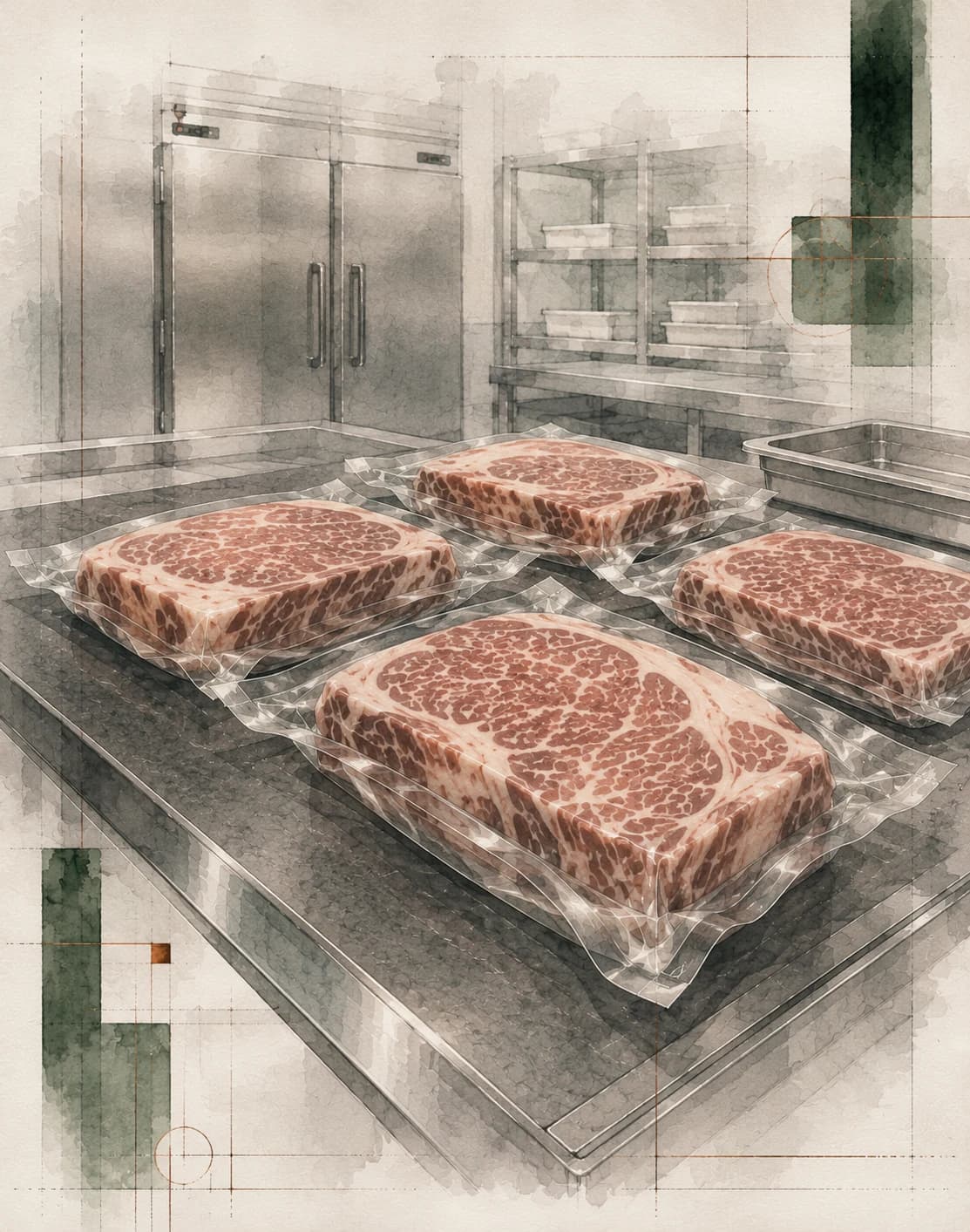
Japanese Wagyu exports are often built around three famous cuts: ribeye, striploin, and tenderloin.
Those cuts matter. They anchor premium menus, create visual impact, and are easy for customers to understand. But they are only part of the carcass. Buyers who focus only on loin cuts often enter the most competitive, highest-cost part of the market while missing the margin potential of chuck, round, short plate, brisket, shank, and trim.
For importers, distributors, foodservice operators, and retailers, the real sourcing question is not only which grade to buy. It is how to build a cut program that matches your channels.
Key Takeaways
- Loin cuts are the export engine of Japanese Wagyu, but they are not the whole opportunity.
- Ribeye, striploin, and tenderloin carry the clearest premium positioning.
- Chuck, round, short plate, brisket, shank, and trim can improve program economics when used correctly.
- Whole-carcass or mixed-cut programs can reduce dependence on scarce premium cuts.
- Buyers should specify cut, grade, format, fabrication, and intended use before comparing quotes.
Why cut economics matter
Japanese Wagyu is expensive because the product is scarce, the production system is intensive, and export documentation is strict. If a buyer only asks for A5 ribeye or striploin, they compete for the same premium cuts that every steakhouse, luxury retailer, and gift program wants.
A broader cut strategy can change the economics. Non-loin cuts often carry strong marbling and flavor at a lower input cost. They also support menu formats that do not require large steak portions.
For a full cut map, see our Wagyu cuts guide.
Loin cuts: the premium export anchor
Loin cuts are the easiest Japanese Wagyu cuts to sell because the customer already understands them.
Cut | Commercial role | Best fit |
|---|---|---|
Ribeye | Maximum marbling and visual impact | Steakhouse, teppanyaki, premium retail, tasting menus |
Striploin | Balanced marbling, firmer bite, reliable portioning | Steakhouses, retail steaks, sukiyaki and shabu-shabu slicing |
Tenderloin | Scarcity and tenderness premium | Fine dining, hotels, omakase, prestige menus |
Loin cuts are useful, but they create allocation pressure. Tenderloin in particular is physically limited by carcass yield. A buyer cannot simply scale tenderloin supply by requesting more.
Non-loin cuts: the margin opportunity
In conventional beef, non-loin cuts often sit far below steak cuts in value. Japanese Wagyu changes that logic because the marbling and fat quality carry across more of the carcass.
Chuck roll can support sukiyaki, shabu-shabu, yakiniku, and zabuton steak programs. Short plate can drive yakiniku and Korean-style BBQ. Round can work for thin slices, roast beef, carpaccio, or tataki. Brisket and shank can support slow-cooked premium dishes. Trim can become burgers, tallow, prepared foods, or blending material.
Non-loin cut | Primary use | Buyer value |
|---|---|---|
Chuck roll | Sukiyaki, shabu-shabu, yakiniku, zabuton | Flexible and high-volume |
Round | Thin slices, roast beef, carpaccio, tataki | Lean profile with lower cost |
Short plate | Yakiniku, kalbi, hot pot | High-frequency foodservice demand |
Brisket | BBQ, braise, gyudon, prepared foods | Rich slow-cook potential |
Shank | Ramen, broth, osso buco, braise | Collagen-rich, low-cost storytelling cut |
Trim | Burgers, grind, tallow, prepared lines | Whole-program margin support |
Loin-only vs balanced programs
There are three common program shapes.
Program type | Strength | Weakness | Best for |
|---|---|---|---|
Loin-only | Simple premium story | High competition, tight supply, high input cost | Specialist fine-dining importers |
Balanced cut program | Better blended economics and broader menus | Requires more SKU management | Distributors and multi-channel operators |
Non-loin focused | Lower cost and strong margin potential | Needs customer education | Yakiniku, hot pot, retail, casual premium programs |
A balanced program can also make a buyer more useful to Japan-side suppliers because it helps move more of the carcass, not only the most requested subprimals.
Chilled vs frozen format
Format affects the commercial plan.
Chilled Wagyu is attractive for high-end steak programs where texture and freshness perception matter. It usually requires fast turnover and tighter cold-chain management.
Frozen Wagyu is often more practical for slice packs, non-loin cuts, trim, and larger-volume distribution. It can support sea freight economics and inventory planning when handled correctly.
Format | Best fit | Buyer caveat |
|---|---|---|
Chilled | Fine dining, premium loin steaks, fast-turnover accounts | Higher logistics cost and shorter usable window |
Frozen | Slice packs, non-loin cuts, trim, larger-volume programs | Requires disciplined thawing and storage protocols |
How to write a better cut specification
A weak inquiry says:
“Please quote A5 Wagyu.”
A stronger inquiry says:
“Please quote Japanese Wagyu A4-A5 options across ribeye, striploin, chuck roll, short plate, and trim. We need frozen format for foodservice distribution, with carton details, cut specifications, BMS range, and export documentation for our market.”
A complete specification may include:
- target grade and BMS window
- cut name and Japanese cut name where useful
- block, portioned, sliced, or trim format
- chilled or frozen requirement
- carton weight and pack size
- destination market
- documentation requirements
- intended foodservice or retail use
- acceptable alternatives if a cut is limited
The buyer takeaway
Loin cuts sell the image of Japanese Wagyu, but non-loin cuts often make the program sustainable.
Buyers who understand both sides can build better menus, support more price points, and reduce dependence on scarce premium cuts. The goal is not to avoid ribeye or striploin. The goal is to use them alongside the rest of the carcass in a way that fits your channel.
Want to build a balanced Japanese Wagyu cut program? Contact First Agri to discuss cuts, grades, formats, and documentation for your market.