
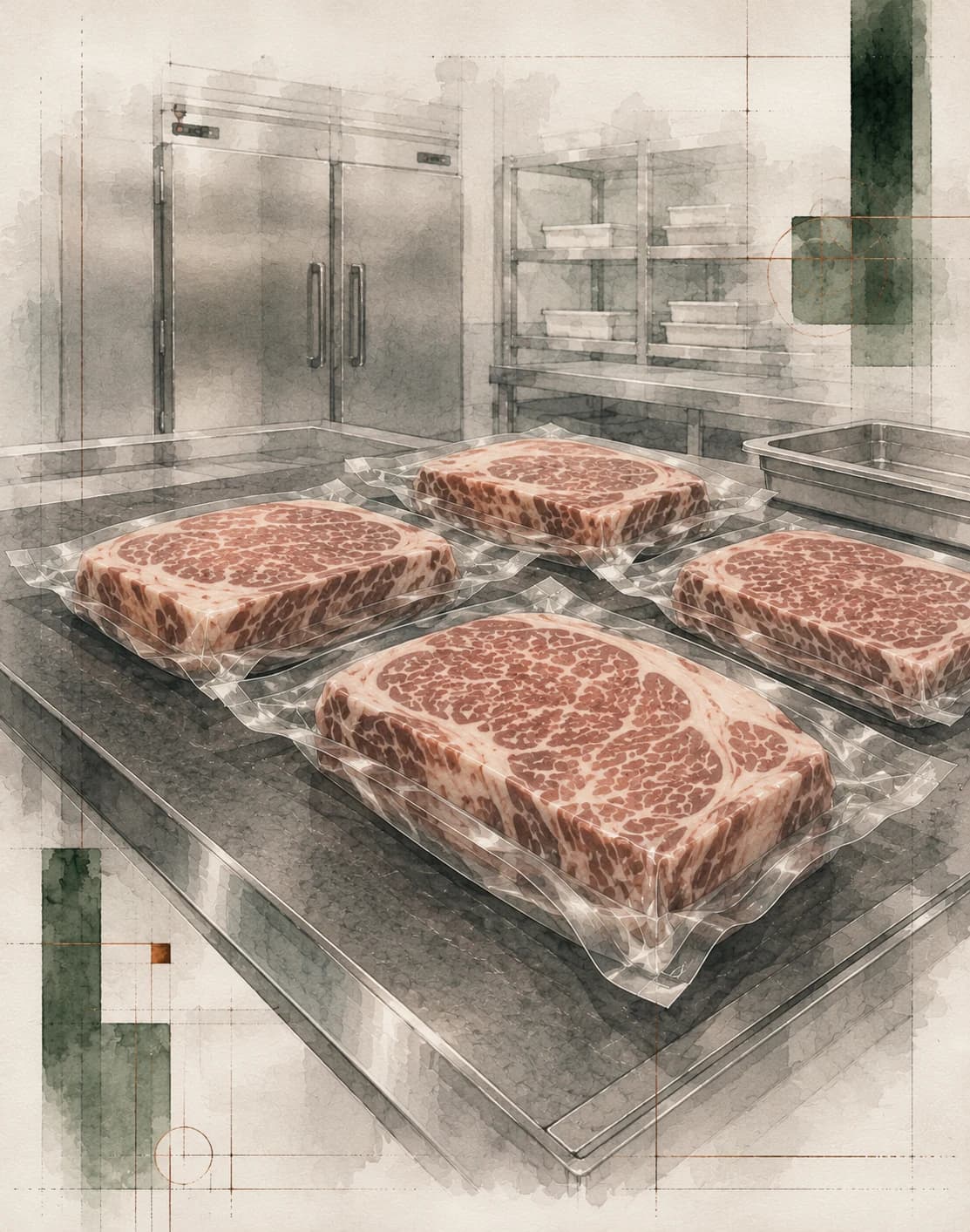
Ribeye, striploin, and tenderloin are the three Japanese Wagyu loin cuts most buyers ask about first.
They are all premium cuts, but they do not solve the same commercial problem. Ribeye delivers the strongest marbling image. Striploin provides balance, portioning consistency, and a familiar steak format. Tenderloin is the scarcity-driven prestige cut, valued for texture more than visible marbling.
For B2B buyers, the right cut depends on the menu, guest expectation, portion size, kitchen capability, and supply plan.
Key Takeaways
- Ribeye is the best visual showcase for Japanese Wagyu marbling.
- Striploin is often the most practical steakhouse and retail workhorse.
- Tenderloin is the scarcest loin cut and should be positioned around tenderness and prestige.
- A5 portion sizes should be much smaller than conventional steak portions.
- Buyers should confirm cut, BMS, format, carton size, and documentation before ordering.
Why loin cut choice matters
Grade alone does not determine the best product for a program. A5 ribeye, A5 striploin, and A5 tenderloin can all come from high-quality Japanese Wagyu, but each creates a different eating experience.
The grading cross-section is taken around the rib area, so ribeye often shows the most direct expression of the recorded marbling score. Striploin usually feels more structured and steak-like. Tenderloin is naturally leaner but extremely tender and scarce.
For a complete cut overview, see our Wagyu cuts guide.
Ribeye: maximum marbling and menu drama
Ribeye is the classic Japanese Wagyu hero cut. It shows abundant marbling, strong visual contrast, and the rich, buttery texture many customers associate with A5 Wagyu.
It works especially well for:
- high-end steakhouse features
- teppanyaki and tasting menus
- thin-sliced yakiniku
- premium retail photography
- special-occasion menu items
The ribeye's strength is also its operational challenge. The fat melts quickly, portions must be controlled, and large conventional steak sizes can overwhelm guests.
Ribeye advantage | Buyer caution |
|---|---|
Strongest visual marbling signal | Can be too rich in large portions |
Clear premium menu story | Requires careful heat control |
Works across steak, teppanyaki, and yakiniku | Portion consistency can vary across the primal |
Striploin: the program workhorse
Striploin is often the most useful loin cut for a repeatable foodservice or retail program. It has strong marbling, but it usually keeps a firmer bite than ribeye. That makes it easier for customers familiar with classic steak cuts to understand.
Striploin is a strong fit for:
- steakhouses that want a recognizable premium steak
- premium grocery and retail packs
- sukiyaki or shabu-shabu slicing
- banquet or group menus requiring consistent portions
- first-time Japanese Wagyu programs
For many buyers, striploin provides the best balance of visible marbling, operational reliability, and customer familiarity.
Tenderloin: scarce, tender, and prestige-driven
Wagyu tenderloin is not the most marbled loin cut. Its value comes from tenderness, fine texture, and scarcity.
Each animal yields only a small amount of tenderloin, so allocation is structurally limited. That makes tenderloin difficult to scale as a daily menu item unless the buyer has confirmed supply and a clear reservation plan.
Tenderloin is best for:
- omakase and tasting menus
- hotel and resort premium dining
- chateaubriand-style service
- luxury menus where filet carries strong customer recognition
The caveat is important: a guest expecting the most dramatic Wagyu marbling may find tenderloin visually less impressive than ribeye or striploin. Menu language should emphasize tenderness and rarity, not maximum marbling.
Side-by-side buyer comparison
Dimension | Ribeye | Striploin | Tenderloin |
|---|---|---|---|
Marbling visual | Highest | High and more uniform | Lower than ribeye and striploin |
Texture | Rich and buttery | Balanced with steak bite | Very tender and fine-grained |
Best role | Hero cut | Workhorse cut | Trophy cut |
Portioning | Small portions recommended | More consistent portioning | Small medallions or tasting portions |
Supply | Limited but more available than tenderloin | Relatively practical for programs | Most constrained |
Portioning Japanese Wagyu loin cuts
Japanese Wagyu portions should usually be smaller than conventional beef portions. This is especially true for A5.
Menu context | Practical portion | Notes |
|---|---|---|
Tasting course | 30-60 g | Enough for intensity without fatigue |
Premium main course | 85-115 g | Common range for A5-focused dining |
Retail steak pack | Smaller shared portions | Clear cooking guidance is essential |
Yakiniku | 30-100 g per order | Small portions across multiple cuts |
Large 8-12 oz steak logic rarely fits Japanese A5 Wagyu. The fat level changes how the product should be served and priced.
Chilled or frozen?
Chilled format is attractive for high-end restaurants with fast turnover and strong cold-chain control. Frozen format is often more practical for distribution, retail, and slice programs.
The right answer depends on the channel, not on prestige alone. A chilled ribeye may be ideal for a tasting menu. A frozen striploin block may be better for a distributor supporting multiple restaurant accounts.
How to choose the right cut
If your priority is... | Start with... | Why |
|---|---|---|
Maximum visual marbling | Ribeye | It is the iconic Wagyu cross-section |
Repeatable steak program | Striploin | It balances marbling, bite, and portioning |
Luxury tasting menu prestige | Tenderloin | It carries scarcity and fine-dining recognition |
First-time Wagyu launch | Striploin or lower-BMS ribeye | More approachable for guests and operations |
The buyer takeaway
Ribeye, striploin, and tenderloin are all premium Japanese Wagyu cuts, but they should not be treated as interchangeable.
Use ribeye when the program needs maximum visual impact. Use striploin when the program needs balance and repeatability. Use tenderloin when scarcity, texture, and prestige justify the premium.
Need help choosing the right loin cuts for your restaurant or distribution program? Contact First Agri to discuss grade, cut, format, and documentation.