
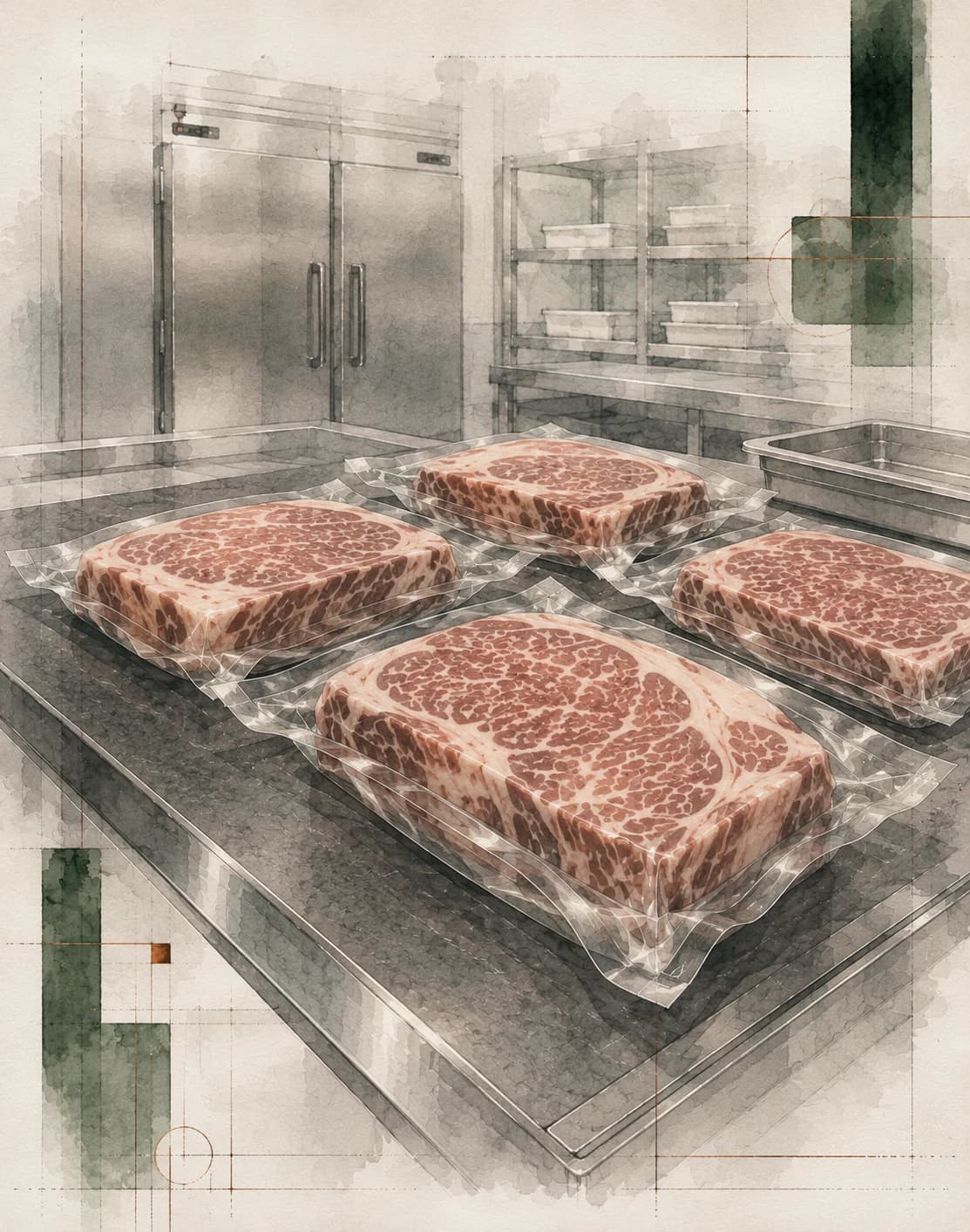
Japanese Wagyu is often sold through ribeye, striploin, and tenderloin. Those cuts are important, but they do not represent the full carcass.
For B2B buyers, non-loin cuts can be the difference between a one-time luxury feature and a sustainable Wagyu program. Chuck, round, brisket, shank, short plate, and trim can support more menu formats, lower blended input cost, and stronger margins when handled correctly.
This guide explains how non-loin Japanese Wagyu cuts can work for importers, distributors, foodservice operators, and retailers.
Key Takeaways
- Non-loin cuts make up most of the carcass and can carry strong Wagyu value.
- Chuck roll is one of the most flexible cuts for sukiyaki, shabu-shabu, yakiniku, and zabuton programs.
- Round can work for thin slices, roast beef, carpaccio, tataki, and katsu.
- Short plate is essential for yakiniku and Korean-style BBQ formats.
- Trim can become a high-volume margin engine through burgers, grind, tallow, and prepared foods.
Why buyers should look beyond the loin
Loin cuts are easy to explain, but they are expensive and highly competed for. Non-loin cuts require more culinary planning, but they can make a Wagyu program more profitable and resilient.
The reason is simple: Japanese Wagyu marbling and fat quality are not limited to ribeye and striploin. Many secondary cuts carry enough richness to support premium menus when matched with the right cooking method.
For the full carcass context, see our Wagyu cuts guide.
Chuck roll: the flexible bridge cut
Chuck roll is one of the most important non-loin cuts for B2B programs. It can be thin-sliced for sukiyaki and shabu-shabu, portioned for yakiniku, or broken down into valuable sub-muscles such as zabuton and chuck eye.
For buyers serving both Japanese and Western-style accounts, chuck roll is especially useful because it can move across formats.
Chuck application | Buyer value |
|---|---|
Sukiyaki / shabu-shabu slices | High-volume Japanese dining format |
Yakiniku cuts | Strong marbling and small-portion economics |
Zabuton / chuck flap | Premium secondary steak or grill item |
Braise or ragu | Casual fine-dining and prepared-food use |
Round: leaner, useful, and underappreciated
Round is naturally leaner than chuck or short plate, but Japanese Wagyu round still carries more tenderness and flavor than conventional round.
It can work well in:
- shabu-shabu and sukiyaki slice packs
- roast beef
- tataki
- carpaccio
- Wagyu katsu
- premium deli or retail cold-slice formats
Round is useful for markets where customers want Japanese Wagyu but may not want the intensity of A5 ribeye. It also helps buyers build more accessible price points.
Brisket: premium slow-cook potential
Wagyu brisket can support BBQ, braised dishes, gyudon-style bowls, and prepared foods. The fat and connective tissue respond well to long cooking when the operator understands yield loss and portion control.
It is not a simple replacement for conventional brisket. Wagyu brisket needs careful cooking, holding, and pricing. But in the right market, it can create a differentiated BBQ or comfort-food product with a clear premium story.
Shank: collagen, broth, and braise value
Shank is a low-cost, high-collagen cut with strong potential for ramen, broth, osso buco, pot-au-feu, and braised dishes.
For casual and mid-casual concepts, shank can add Japanese Wagyu credibility without requiring steakhouse pricing. It is especially useful where the dish depends on gelatin-rich texture and slow-cooked depth.
Short plate: the yakiniku and kalbi workhorse
Short plate is one of the most important cuts for yakiniku and Korean-style BBQ. It delivers fatty flavor, grill performance, and small-portion repeat ordering.
Buyers should specify format carefully:
- boneless or bone-in
- slice thickness
- rib count or cut style where relevant
- grade and BMS range
- intended channel: yakiniku, kalbi, hot pot, or retail
Short plate often sells better when positioned by use case rather than by generic cut name.
Trim: the margin engine
Trim should not be treated as waste. In a well-designed Wagyu program, trim can become ground Wagyu, burger patties, meatballs, sausage, ragu, gyoza filling, tallow, or prepared-food components.
For distributors and operators, trim creates a way to move volume and reach customers who cannot buy premium steak cuts. The key is to define trim specifications clearly, including lean ratio, grade source, and intended processing use.
Customer education matters
Non-loin Wagyu often needs more explanation than ribeye or striploin. That is not a weakness. It can become a sales advantage when handled well.
Helpful education tools include:
- using both Japanese and English cut names where appropriate
- explaining the cooking method
- showing traceability documentation
- training staff on portion size and richness
- providing menu or retail cooking guidance
For common buyer questions, see our Wagyu buyer FAQ.
Operational checklist
Before building a non-loin program, confirm:
- butchery capability at origin or destination
- sub-muscle extraction needs
- slice thickness or portion format
- frozen or chilled logistics
- cooking yield assumptions
- pack size and carton details
- grade, BMS, and documentation
- customer education requirements
The buyer takeaway
Non-loin Japanese Wagyu cuts are not secondary in business value. They are often the cuts that make a program scalable.
Ribeye and striploin may open the door, but chuck, round, short plate, brisket, shank, and trim can support the menu range, price points, and repeat volume that a serious B2B program needs.
Want to build a non-loin Wagyu program for your market? Contact First Agri to discuss cuts, formats, documentation, and sourcing options.