
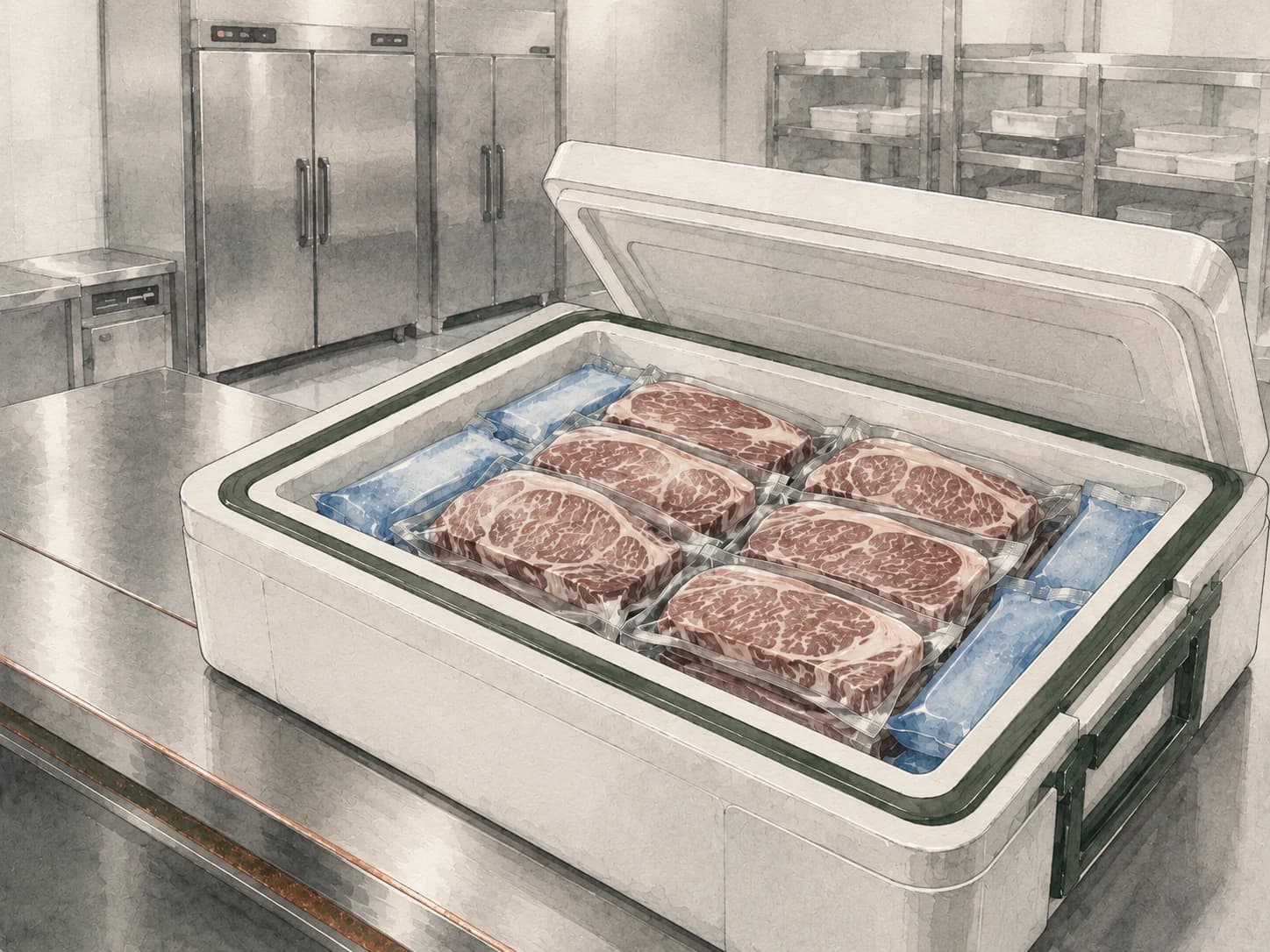
Japanese Wagyu is a premium ingredient, but its value can be lost quickly through poor handling. The dense intramuscular fat, high product cost, and long international supply chain make temperature discipline commercially important from port of entry to final service.
This guide is written for distributors, retail operators, and foodservice teams. It focuses on practical handling decisions: receiving, storage, shelf-life tracking, thawing, portioning, and what to do when the cold chain may have been compromised.
Buyer takeaway: Protect Wagyu value by treating cold chain as a documented SOP, not a warehouse habit. Stable temperature, intact vacuum packs, slow thawing, and FIFO rotation matter.
Temperature Targets by Format
Format or stage | Temperature target | Main risk |
|---|---|---|
Frozen storage | -18 C or below | Freezer burn, fluctuation, thaw-refreeze cycles |
Chilled storage | 0-4 C | Short shelf life and oxidation |
After thawing | 0-4 C refrigerated | Spoilage if held too long |
Receiving | Check against supplier and carrier records | Hidden temperature abuse during transit |
Exact requirements can vary by supplier, packaging, and destination authority. Buyers should use the supplier's specification and local food safety rules as the controlling reference.
Receiving Checks
Receiving is the first point where the buyer can protect the program. Check carton condition, surface temperature where appropriate, vacuum-pack integrity, label consistency, lot numbers, and document alignment before the product disappears into storage.
- Look for broken seals, swollen packs, excess purge, or damaged cartons.
- Confirm carton count and net weight against the packing list.
- Record receipt date, lot numbers, and storage location.
- Request temperature logger data for high-value or chilled shipments.
Frozen Storage and FIFO Rotation
Frozen Wagyu should be stored in a stable deep-freeze environment. Fluctuation is the enemy because repeated warming and cooling can damage texture and create ice crystal formation. Even when the product remains technically frozen, unstable storage can reduce eating quality.
FIFO rotation is essential. Premium inventory often sells in irregular waves, so every carton should be labeled with receipt date, product date where available, grade, cut, and customer allocation.
For distributors, a freezer map can be as important as a purchase order. High-value Wagyu should not be buried behind commodity stock where it is hard to rotate, inspect, or allocate quickly to priority accounts.
Thawing: Slow Is Usually Better
The preferred thawing method is refrigeration while the product remains sealed. Smaller packs may thaw within a day or two, while larger primals can require several days. Buyers should plan thawing backward from service or fabrication time rather than rushing at the last minute.
Cold-water thawing in a sealed pack can be an emergency method for smaller cuts, but it is not ideal for premium product planning. Room-temperature thawing and microwave thawing should be avoided because they increase safety risk and damage quality.
Handling After Thawing
Once thawed, Wagyu should be kept refrigerated and used within the supplier's recommended window. Opening the vacuum pack starts a new clock because the product is exposed to oxygen and handling risk.
If a customer cancels an order, do not automatically refreeze. Refreezing may be acceptable only under narrow conditions, such as unopened vacuum packaging, short thaw duration, and continuous refrigeration. When in doubt, follow your local food safety authority and supplier guidance.
Every operator should define who can approve exceptions. A warehouse team should not make ad hoc decisions on thawed premium beef without QA, chef, or management approval because the commercial and safety stakes are higher than for standard inventory.
FAQ for B2B Buyers
Can Wagyu be thawed at room temperature?
No. Room-temperature thawing creates food safety risk and can damage fat texture. Use refrigerator thawing whenever possible.
How do I know if the cold chain was broken?
Check temperature logger data where available, inspect for ice crystals, soft or refrozen texture, damaged packaging, and inconsistent product temperature at receipt.
Can thawed Wagyu be refrozen?
Only under strict conditions and local food safety guidance. It should never be treated as a routine inventory-management method.
Related Wagyu Guides
- Chilled vs frozen Japanese Wagyu
- Export documents and compliance
- Retail and e-commerce merchandising
- Building a distributor Wagyu program
- Wagyu export and cold-chain overview
Sources and Verification Points
Use these sources as starting points for document checks, trade planning, and supplier conversations. Current import rules, certification status, and pricing should always be confirmed before purchase.