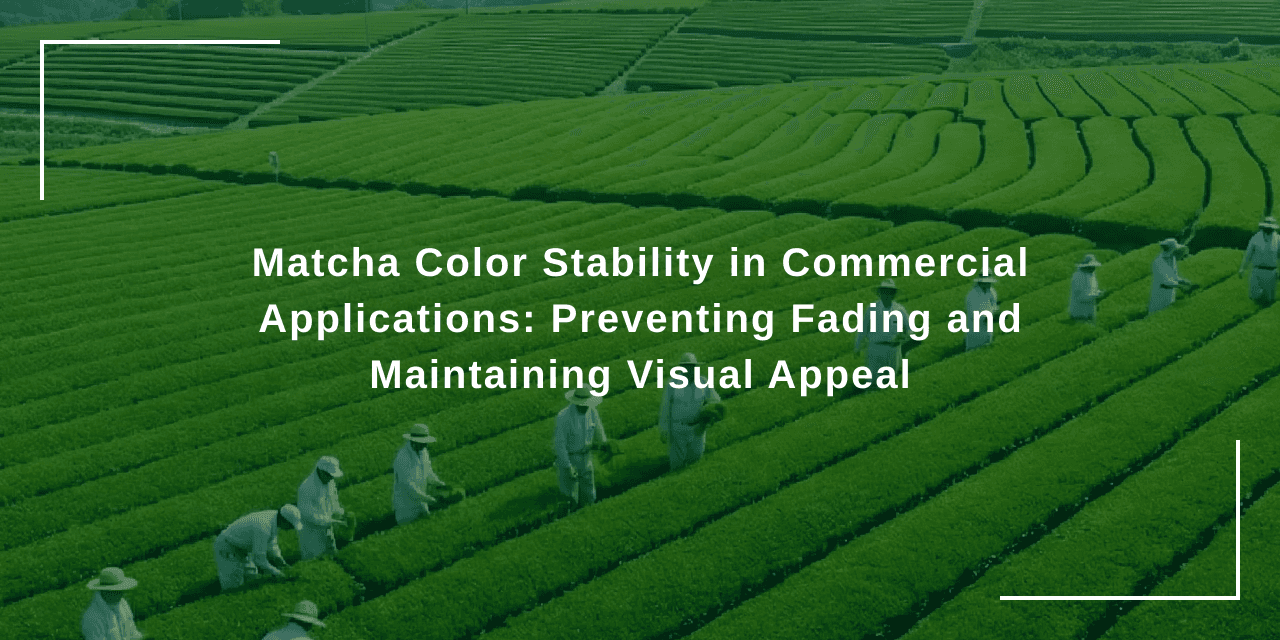
The vibrant jade-green color of matcha is perhaps its most recognizable characteristic, serving as a visual promise of quality and freshness that drives consumer purchasing decisions. For B2B buyers in the food and beverage industry, maintaining this distinctive color throughout production, storage, and shelf life represents a critical challenge that directly impacts product appeal and profitability. Understanding the science behind matcha color stability and implementing effective matcha fading prevention strategies is essential for success in today's competitive marketplace.
Color degradation in matcha products can lead to significant financial losses, customer dissatisfaction, and brand damage. Matcha left exposed to light, heat, air, or moisture loses its vibrant color steadily, shifting from an appealing jade green to a dull olive-brown. For commercial operators investing in premium matcha formulations, such losses represent both immediate production costs and long-term reputation risks.
Understanding Matcha Color Chemistry: Chlorophyll and Its Vulnerabilities
The brilliant green color that makes matcha so visually striking comes primarily from chlorophyll, specifically chlorophyll a and chlorophyll b. These complex molecules, which give plants their ability to photosynthesize, are also responsible for matcha's distinctive appearance. However, chlorophyll's molecular structure makes it inherently unstable when exposed to certain environmental conditions.
Chlorophyll molecules contain a central magnesium atom surrounded by a porphyrin ring structure. This magnesium center is the key vulnerability point in matcha color stability. When exposed to acidic conditions, especially combined with heat, the magnesium atom can be displaced by hydrogen ions, converting the bright green chlorophyll into pheophytin—a compound that appears olive-brown or yellow-green.
The Degradation Process
The transformation from vibrant green to dull brown occurs through several pathways:
- Pheophytinization: Acid-catalyzed removal of magnesium from chlorophyll, resulting in brown-colored pheophytin
- Chlorophyllase activity: Enzymatic breakdown of chlorophyll molecules
- Oxidation: Direct damage from exposure to oxygen and light
- Heat degradation: Thermal breakdown of the chlorophyll structure
Understanding these mechanisms allows commercial operators to develop targeted strategies for preserving color throughout their production processes.
Common Causes of Color Loss in Commercial Production
In commercial applications, matcha color degradation typically results from a combination of factors that occur during processing, formulation, and storage. Identifying these risk points is crucial for implementing effective matcha fading prevention measures.
pH-Related Challenges
Perhaps the most significant threat to matcha color stability is pH fluctuation. Chlorophyll remains stable in neutral to slightly alkaline conditions (pH 7-8) but degrades rapidly in acidic environments. Many commercial applications inadvertently create acidic conditions through ingredient interactions:
- Dairy products (milk pH typically ranges from 6.4-6.8)
- Fruit additions (citrus fruits can drop pH below 4.0)
- Fermented ingredients like yogurt or sourdough
- Preservatives such as citric acid or ascorbic acid
Temperature Exposure
Heat accelerates all forms of chlorophyll degradation. Commercial food production often involves high-temperature processes that can rapidly destroy matcha's color:
- Pasteurization temperatures (161°F/72°C for 15 seconds)
- Baking processes (300-400°F/149-204°C)
- Hot beverage preparation (180-212°F/82-100°C)
- Steaming or blanching operations
Light and Oxygen Exposure
Photodegradation and oxidation work synergistically to break down chlorophyll. Fluorescent lighting in retail environments, transparent packaging, and extended exposure to air during processing all contribute to color loss. Matcha fades under both sunlight and artificial light, so it should be kept in light-shielding containers.
Storage and Handling Issues
Improper storage conditions compound all other degradation factors. Common commercial storage mistakes include:
- Inadequate humidity control (the powder absorbs moisture from humid air and from condensation when a cold container is opened too soon)
- Temperature fluctuations during transport and warehousing
- Exposure to strong odors or chemical vapors
- Extended storage periods without proper rotation
Protective Techniques and Formulation Strategies
Successful commercial matcha applications require proactive color protection strategies implemented at every stage of production. These techniques can significantly extend color retention and maintain product appeal throughout the intended shelf life.
pH Management and Buffering
Controlling pH represents the most effective single intervention for preserving matcha color. Commercial operators can implement several strategies:
- Alkaline buffering: Adding food-grade alkaline compounds like sodium bicarbonate or potassium carbonate to maintain pH above 7.0
- Ingredient sequencing: Introducing acidic components after matcha has been stabilized with protective agents
- Encapsulation: Using microencapsulation to isolate matcha from pH-altering ingredients
- Alternative formulations: Substituting acidic ingredients with neutral alternatives where possible
Protective Additives and Stabilizers
Several food-grade additives can enhance matcha color stability:
Additive | Function | Typical Usage Level | Application Notes |
|---|---|---|---|
Ascorbyl Palmitate | Antioxidant | 0.01-0.02% | Fat-soluble, effective in baked goods |
Sodium Copper Chlorophyllin | Added green colorant | Up to 0.2% (U.S., dry mix) | Heat-stable; the U.S. permits it only in citrus-based dry beverage mixes, so check your market's rules |
Mixed Tocopherols | Antioxidant | 0.02-0.05% | Natural option, excellent for beverages |
Magnesium Oxide | pH buffer | 0.1-0.5% | Maintains alkaline conditions |
Processing Modifications
Adapting production processes to minimize color degradation often requires balancing food safety requirements with color preservation needs:
- Shorter heat exposure: Using HTST (High Temperature, Short Time) methods instead of extended heat exposure
- Nitrogen packaging: Displacing oxygen with inert gas during packaging
- Cold-chain maintenance: Keeping products below 40°F/4°C throughout distribution
- Light-protective packaging: Using opaque or UV-filtering materials
Testing and Quality Control for Color Retention
Implementing robust testing protocols ensures consistent matcha color stability and helps identify potential issues before they impact finished products. Commercial operators should establish both incoming inspection procedures and ongoing monitoring throughout production.
Analytical Methods
Several standardized testing methods can quantify color retention:
- Spectrophotometry: Measuring absorbance at 663nm and 642nm to quantify chlorophyll content
- Colorimetry: Using L*a*b* color space measurements to track changes over time
- Visual comparison: Standardized color matching against reference samples
- Accelerated stability testing: Exposing samples to elevated temperature and humidity to predict shelf life
Quality Control Checkpoints
Effective quality control requires monitoring at multiple production stages:
- Raw material inspection: Testing incoming matcha for initial color intensity and stability
- Process monitoring: Checking color retention during mixing, heating, and packaging
- Finished product testing: Verifying color standards before release
- Shelf-life studies: Ongoing monitoring of products under actual storage conditions
Documentation and Traceability
Maintaining detailed records enables rapid identification and resolution of color stability issues. Key documentation should include:
- Batch-specific color measurements
- Processing conditions and deviations
- Storage temperatures and durations
- Customer feedback and complaints
Product-Specific Solutions: Beverages, Baked Goods, and Frozen Items
Different product categories present unique challenges for maintaining matcha color stability. Tailoring protection strategies to specific applications maximizes effectiveness while minimizing costs.
Beverage Applications
Matcha beverages face particular challenges from pH interactions with dairy products, temperature exposure during preparation, and extended display periods. Successful strategies include:
- Pre-stabilization: Treating matcha with alkaline buffers before combining with acidic ingredients
- Temperature control: Using lower brewing temperatures (160-175°F/71-79°C) when possible
- Packaging considerations: Light-blocking containers and nitrogen flushing for bottled products
- Serving protocols: Training staff on proper preparation techniques to minimize color degradation
Baked Goods and Confections
High baking temperatures and acidic ingredients like chocolate or fruit make baked applications particularly challenging. Effective approaches include:
- Heat-stable alternatives: Partially substituting natural chlorophyll with heat-resistant colorants
- Ingredient modification: Using Dutch-processed cocoa or alkaline-treated ingredients
- Protective coatings: Encapsulating matcha in fat or protein matrices
- Dual-stage addition: Adding some matcha after initial baking for color enhancement
Frozen and Refrigerated Products
Cold storage generally helps preserve matcha color, but freeze-thaw cycles and extended storage periods can still cause degradation:
- Cryoprotectants: Adding ingredients that prevent ice crystal formation
- Antioxidant systems: Comprehensive protection against oxidative damage
- Barrier packaging: Preventing moisture and oxygen infiltration during storage
- Temperature stability: Maintaining consistent frozen storage conditions
Implementation and Best Practices
Successfully implementing matcha fading prevention strategies requires systematic planning and ongoing attention to detail. Companies should start with the most impactful interventions—typically pH control and temperature management—before adding more complex protective measures.
Cost-Benefit Analysis
While protective measures involve additional costs, the benefits typically far outweigh the investments:
- Reduced product waste and recalls
- Extended shelf life and distribution reach
- Enhanced brand reputation and customer satisfaction
- Premium pricing opportunities for consistently appealing products
Staff Training and Protocols
Human factors play a crucial role in maintaining color stability. Comprehensive training should cover:
- Proper storage and handling procedures
- Recognition of early color degradation signs
- Correct preparation and processing techniques
- Quality control testing procedures
Maintaining the vibrant green color that makes matcha so appealing requires understanding the underlying science and implementing comprehensive protection strategies throughout production and storage. By addressing pH control, temperature management, light exposure, and oxidation prevention, commercial operators can significantly extend color retention and maintain product appeal. The investment in proper color stability measures pays dividends through reduced waste, extended shelf life, and enhanced customer satisfaction.
First Agri understands the critical importance of color stability in commercial matcha applications. Our direct partnerships with premium Japanese producers ensure you receive the highest quality matcha with optimal color retention potential. We work closely with food manufacturers, beverage companies, and foodservice operators to provide technical support and customized solutions for your specific applications. Request a sample today to experience the difference that proper sourcing and handling make in maintaining that distinctive matcha green that drives sales and delights customers.