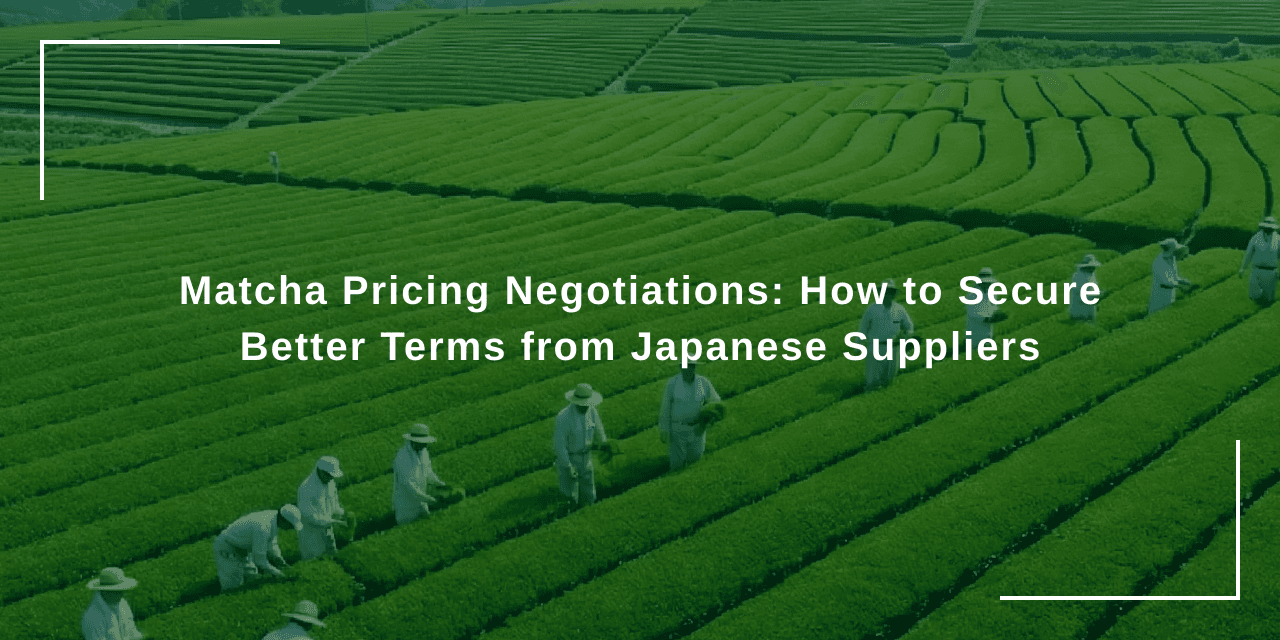
Securing favorable pricing from Japanese matcha suppliers requires more than aggressive bargaining tactics. Success in matcha wholesale pricing negotiations demands cultural sensitivity, strategic planning, and a deep understanding of Japan's unique business environment. For B2B buyers ranging from specialty coffee shops to large-scale food manufacturers, mastering these negotiations can mean the difference between razor-thin margins and profitable operations.
Growing demand makes supplier relationships increasingly critical for businesses dependent on consistent, high-quality matcha supplies. Japanese suppliers, who control approximately 80% of the world's premium matcha production, operate within distinct cultural and business frameworks that can either facilitate or hinder successful negotiations.
Understanding Japanese Business Culture in Matcha Negotiations
Japanese business culture prioritizes relationship-building, patience, and mutual respect—principles that directly impact matcha wholesale pricing discussions. Unlike Western negotiation styles that often focus on immediate results, Japanese suppliers value nemawashi (behind-the-scenes consensus building) and long-term partnerships.
The Importance of Face-to-Face Relationships
While digital communication has transformed global commerce, Japanese matcha suppliers still place enormous value on in-person meetings. Companies that invest in visiting Japan for initial negotiations often secure 10-15% better pricing than those conducting business solely through email or video calls. This investment demonstrates commitment and respect for traditional business practices.
When planning supplier visits, consider timing your trip during Japan's business calendar. Avoid Golden Week (late April to early May) and the Obon holiday period (mid-August), when many businesses operate with reduced capacity. Instead, target March-April or September-October when suppliers are most receptive to new partnerships.
Communication Protocols That Impact Pricing
Japanese suppliers often interpret direct price challenges as disrespectful, potentially damaging long-term relationships and pricing opportunities. Instead of demanding lower prices, frame discussions around value optimization and mutual benefits. Phrases like "How can we structure our partnership to achieve better economies of scale?" resonate more effectively than "Your prices are too high."
Patience during negotiations is crucial. Japanese suppliers may require multiple internal meetings before responding to pricing proposals. Rushing this process often results in higher quotes or outright rejection of partnership opportunities.
Volume-Based Pricing Strategies and Minimum Order Commitments
Understanding Japan's volume-based pricing structure is essential for optimizing matcha wholesale costs. Most Japanese suppliers operate on tiered pricing models that reward larger, more predictable orders with substantial discounts.
Typical Volume Discount Structures
Order Quantity (kg) | Discount from Base Price | Typical MOQ Requirements | Payment Terms |
|---|---|---|---|
20-49 kg | 0-5% | 20 kg minimum | 100% advance payment |
50-99 kg | 5-12% | 50 kg minimum | 50% advance, 50% before shipping |
100-299 kg | 12-20% | 100 kg minimum | 30% advance, 70% before shipping |
300-499 kg | 20-28% | 300 kg minimum | 30% advance, balance NET 30 |
500+ kg | 28-35% | 500 kg minimum | Negotiable terms |
Strategies for Smaller Buyers
Smaller businesses often struggle with high minimum order quantities, but several strategies can help secure better pricing without overwhelming inventory commitments:
- Consortium Buying: Partner with other local businesses to combine orders and reach higher volume tiers
- Forward Contracting: Commit to purchasing specific quantities over 6-12 month periods, allowing suppliers to plan production more effectively
- Grade Flexibility: Consider purchasing multiple matcha grades in a single order to increase total volume
- Seasonal Planning: Time large orders during Japan's harvest season (April-May) when suppliers offer the best pricing
Negotiating Minimum Order Quantities
While MOQs appear non-negotiable, experienced buyers often find flexibility through creative structuring. Propose splitting orders between different grades or packaging sizes to meet volume requirements while managing cash flow. Some suppliers accept commitments for future orders as partial satisfaction of current MOQ requirements.
For cafe owners and small beverage companies, emphasize your growth trajectory and market expansion plans. Suppliers are more likely to reduce MOQs for buyers demonstrating clear scaling potential rather than static, small-volume customers.
Payment Terms, Currency Risk, and Contract Negotiations
Payment terms significantly impact the total cost of matcha procurement, often adding 5-15% to base pricing through currency fluctuations, financing costs, and payment processing fees.
Managing Currency Risk
The Japanese yen's volatility can dramatically affect matcha costs. Since 2020, USD/JPY exchange rates have fluctuated over 25%, directly impacting procurement budgets for businesses purchasing in yen. Implement these strategies to minimize currency risk:
- Forward Contracts: Lock in exchange rates for future purchases, providing budget certainty
- Natural Hedging: If possible, negotiate pricing in your local currency, transferring currency risk to suppliers
- Dollar-Cost Averaging: Make smaller, regular purchases rather than large quarterly orders to smooth currency impact
Optimal Payment Term Negotiations
Japanese suppliers traditionally prefer advance payments, but established relationships often unlock more favorable terms. The negotiation sequence typically follows this progression:
"Start with building trust through smaller orders with advance payment, then gradually negotiate for better terms as the relationship develops. Most suppliers will consider NET 30 terms after 12-18 months of consistent business."
When requesting extended payment terms, offer compromises that benefit suppliers. These might include:
- Letters of credit for large orders
- Slightly higher pricing in exchange for better payment terms
- Quarterly or semi-annual volume commitments
- Marketing collaboration opportunities in your local market
Contract Negotiation Essentials
Well-structured contracts protect both parties while establishing frameworks for ongoing price discussions. Key elements include:
- Price Adjustment Mechanisms: Clauses addressing how pricing changes with market conditions, typically tied to Japanese agricultural indices
- Quality Specifications: Detailed descriptions of acceptable matcha characteristics, including color, particle size, and taste profiles
- Force Majeure Provisions: Protection against natural disasters, which significantly impact Japanese tea production
- Exclusivity Arrangements: Regional exclusivity rights often justify higher prices but provide competitive advantages
Building Long-Term Partnerships for Better Pricing
The most successful matcha buyers view supplier relationships as strategic partnerships rather than transactional arrangements. This approach typically yields 15-25% better pricing over time compared to purely price-focused relationships.
Value-Added Partnership Elements
Japanese suppliers appreciate partners who contribute beyond simple purchasing. Consider these relationship-building strategies:
- Market Intelligence Sharing: Provide insights about local market trends, consumer preferences, and competitive activities
- Brand Collaboration: Feature supplier stories and Japanese heritage in your marketing, adding value to their brand
- Product Development Partnership: Collaborate on new product development, giving suppliers insight into market needs
- Consistent Communication: Maintain regular contact beyond order placement, showing genuine interest in the partnership
Loyalty Program Benefits
Many established Japanese matcha suppliers offer informal loyalty benefits to long-term partners. These typically include:
- Priority access to premium harvests
- Advanced pricing notifications before market increases
- Customized blending services at no additional cost
- Flexible ordering during supply constraints
- Invitations to exclusive tea ceremonies and cultural events
Performance Metrics That Matter
Track relationship health through key performance indicators that Japanese suppliers value:
- Payment Punctuality: Consistently meeting payment deadlines builds trust and negotiating power
- Order Predictability: Regular ordering patterns help suppliers plan production and offer better pricing
- Communication Quality: Responsive, respectful communication strengthens relationships
- Market Development: Growing your matcha business demonstrates partnership value
Common Negotiation Mistakes to Avoid with Japanese Suppliers
Understanding common pitfalls can prevent relationship damage and pricing disadvantages. These mistakes frequently occur among Western buyers unfamiliar with Japanese business culture.
Cultural Missteps That Damage Pricing Power
Aggressive Deadline Pressure: Demanding immediate responses to pricing requests often results in higher quotes or supplier withdrawal. Japanese decision-making processes require time for internal consultation and consensus building.
Public Price Comparisons: Mentioning competitor pricing during negotiations can be perceived as disrespectful. Instead, focus discussions on value optimization and partnership benefits.
Ignoring Hierarchy: Bypassing established contact points to reach senior decision-makers can damage relationships. Respect organizational structure and work through designated representatives.
Commercial Mistakes That Increase Costs
Insufficient Due Diligence: Failing to research supplier backgrounds, certifications, and market reputation often leads to partnership with higher-cost, lower-quality suppliers. Invest time in thorough supplier evaluation before beginning negotiations.
Short-Term Focus: Prioritizing immediate price savings over long-term relationship building typically results in higher overall costs. Japanese suppliers reward loyalty with better pricing over time.
Inadequate Contract Specifications: Vague quality specifications and delivery terms create opportunities for disputes and additional costs. Invest in detailed contracts that protect both parties.
Timing and Communication Errors
Poor Seasonal Planning: Attempting negotiations during peak harvest or traditional holiday periods often results in delayed responses and missed opportunities.
Language Barrier Assumptions: Assuming all suppliers have perfect English capabilities can lead to misunderstandings. Consider professional translation services for critical negotiations.
Technology Overdependence: Relying exclusively on email or digital communication without phone or video conversations can limit relationship development and negotiating effectiveness.
Recovery Strategies for Damaged Relationships
When mistakes occur, recovery is possible through sincere apology, patience, and demonstrated commitment to proper business practices. Japanese culture values genuine contrition and consistent behavior changes over time.
Consider bringing in cultural advisors or experienced intermediaries to help rebuild damaged relationships. The investment often pays dividends through restored access to better pricing and terms.
Ready to optimize your matcha procurement strategy? First Agri specializes in connecting B2B buyers directly with premium Japanese matcha suppliers, leveraging our deep understanding of Japanese business culture and established relationships throughout Japan's tea-growing regions. Our team handles the cultural nuances, negotiation complexities, and logistics challenges while securing competitive pricing for businesses of all sizes. Request your free matcha samples today and discover how our direct-from-Japan sourcing can improve your product quality while optimizing your procurement costs.