The global matcha market has experienced unprecedented growth, with demand increasing by over 25% annually across North America and Europe. However, this surge has exposed critical vulnerabilities in matcha supply chains that can devastate food businesses unprepared for disruptions. From typhoons in Japan's tea-growing regions to shipping delays and sudden price spikes, matcha sourcing challenges require sophisticated strategies that go far beyond simply finding the lowest price.
For food businesses that depend on consistent matcha supply—whether you're operating specialty cafes, manufacturing beverages, or producing baked goods—supply chain resilience isn't just about avoiding stockouts. It's about maintaining product quality, controlling costs, and preserving customer relationships when disruptions inevitably occur.
Common Matcha Supply Chain Vulnerabilities: Weather, Logistics, and Market Factors
Understanding the unique vulnerabilities in matcha supply chains is the first step toward building resilience. Unlike many agricultural products with global production, high-quality matcha comes almost exclusively from specific regions in Japan, creating inherent concentration risks.
Weather-Related Disruptions
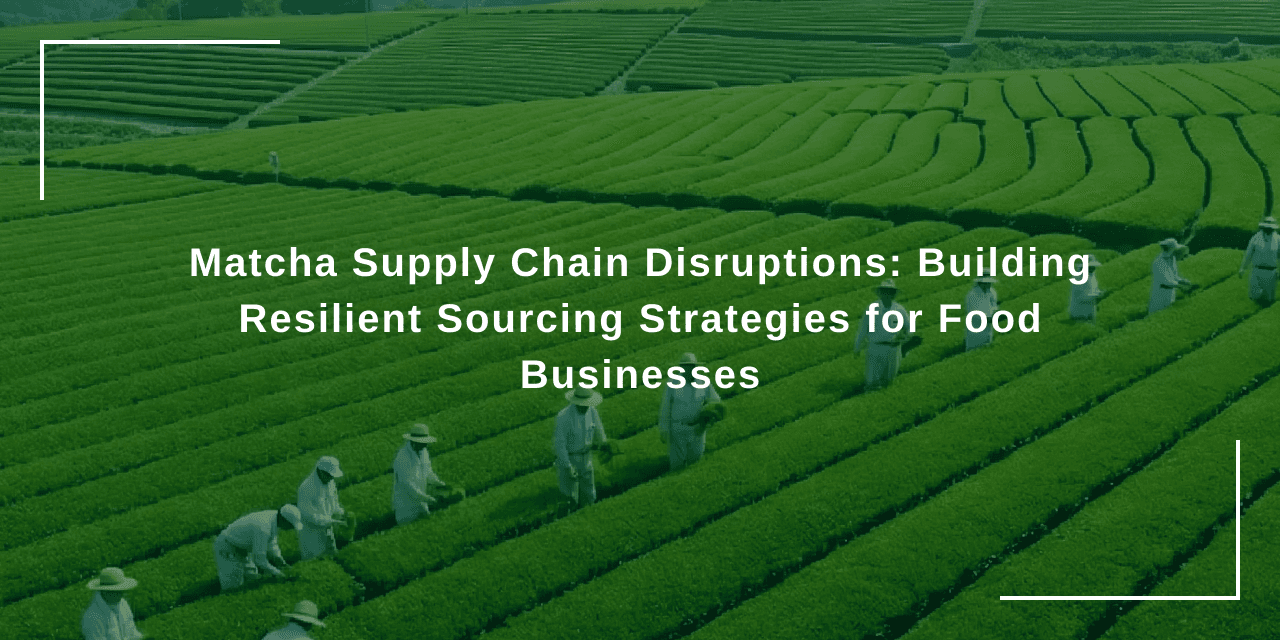
Japan's matcha-producing regions—primarily Uji, Nishio, and Kagoshima—face increasing weather volatility that directly impacts both yield and quality. Late frosts during the crucial first harvest period (April-May) can reduce premium matcha yields by up to 40%, as occurred in 2021 when unseasonable cold weather damaged tender tea shoots across multiple prefectures.
Typhoons pose another significant threat, particularly during the summer months when secondary harvests occur. Beyond immediate crop damage, severe weather can disrupt the delicate shade-growing process essential for matcha production. Tea plants require 20-30 days of shading before harvest to develop the high chlorophyll content and amino acid profiles that define quality matcha.
Climate change has intensified these risks. The Japan Meteorological Agency reports that extreme weather events in tea-growing regions have increased by 35% over the past decade, making weather-related supply disruptions more frequent and severe.
Logistics and Transportation Challenges
Matcha's journey from Japanese tea gardens to international food businesses involves multiple potential failure points. Ocean freight delays, which averaged several days beyond schedule during 2022-2023, can be particularly problematic for matcha due to its sensitivity to heat and humidity during transport.
Port congestion at major shipping hubs has created additional bottlenecks. Los Angeles and Long Beach ports, which handle approximately 60% of matcha imports to North America, experienced average delays of 10-14 days during peak disruption periods. Similar challenges have affected European ports, with Rotterdam and Hamburg seeing comparable delays.
Air freight, while faster, comes with significant cost premiums—typically 4-6 times higher than ocean shipping—and limited capacity during peak seasons or global disruptions. The COVID-19 pandemic demonstrated how quickly air freight options can become constrained, with rates increasing by 300-400% during crisis periods.
Market Factors and Demand Volatility
Matcha markets experience unique demand patterns that can quickly overwhelm supply chains. Social media trends, seasonal beverage launches, and health fad cycles can create sudden demand spikes that exceed suppliers' ability to respond. The "matcha latte trend" of 2023 caught many suppliers off-guard, leading to price increases of 15-25% for ceremonial and culinary grades.
Currency fluctuations also significantly impact matcha costs, as most transactions occur in Japanese yen. A 10% weakening of the buyer's currency against the yen translates directly to increased costs, making budget planning challenging for food businesses operating on thin margins.
Building a Multi-Supplier Strategy: Primary, Secondary, and Emergency Sources
Successful matcha sourcing requires a layered approach that balances quality consistency with supply security. The most resilient food businesses employ a three-tier supplier strategy that provides multiple fallback options without compromising product standards.
Primary Supplier Relationship
Your primary matcha supplier should align closely with your quality specifications, volume requirements, and delivery schedules. Establish long-term partnerships (2-3 year contracts) that include quality guarantees, price stability mechanisms, and priority allocation during shortage periods.
Key criteria for primary supplier selection include:
- Direct relationships with Japanese tea gardens or mills
- Consistent quality certifications (organic, food safety, etc.)
- Transparent traceability documentation
- Adequate storage and handling facilities
- Financial stability and business longevity
Primary suppliers should handle 60-70% of your annual matcha requirements, providing economies of scale while maintaining manageable risk concentration.
Secondary Supplier Network
Secondary suppliers serve as both risk mitigation tools and quality benchmarks. These relationships should be actively maintained through regular sample evaluations and smaller, periodic orders that keep communication channels open.
Effective secondary supplier management involves:
- Quarterly quality assessments to ensure continued compatibility
- Negotiated standby agreements with defined activation triggers
- Regular market intelligence sharing
- Capacity verification for emergency scaling
Secondary suppliers might handle 20-25% of your matcha volume through scheduled orders or serve as backup options for specific grades or applications where slight quality variations are acceptable.
Emergency Source Identification
Emergency suppliers provide crisis response capability when primary and secondary sources fail simultaneously. These relationships require different management approaches, focusing on speed and availability rather than optimal pricing or perfect quality matches.
Emergency supplier networks should be pre-qualified and include at least 2-3 options capable of providing minimum viable quantities within 7-10 days. While emergency sources may involve premium pricing—often 20-40% above normal rates—they prevent complete production shutdowns and customer relationship damage.
Supplier Tier | Volume Allocation | Lead Time | Price Premium | Quality Tolerance | Contract Type |
|---|---|---|---|---|---|
Primary | 60-70% | 2-4 weeks | Baseline | Strict specifications | Long-term (2-3 years) |
Secondary | 20-25% | 3-5 weeks | 0-10% above primary | Minor variations acceptable | Standby agreements |
Emergency | 10-15% | 7-10 days | 20-40% premium | Broader specifications | Spot purchasing |
Inventory Planning and Risk Mitigation: Safety Stock and Contract Terms
Effective matcha inventory management balances the costs of carrying excess stock against the risks of stockouts. Given matcha's limited shelf life—typically 12-18 months for optimal quality—inventory strategies must be more sophisticated than simple bulk purchasing.
Safety Stock Calculations
Matcha safety stock requirements depend on multiple variables including demand variability, lead time uncertainty, and acceptable service levels. Most successful food businesses maintain safety stock equivalent to 4-8 weeks of average consumption, adjusted based on specific risk factors:
- High-risk periods (typhoon season, Golden Week in Japan): Increase safety stock by 25-50%
- New product launches or marketing campaigns: Add 2-3 weeks of projected peak demand
- Single-supplier dependence: Maintain higher safety stock (6-10 weeks) until secondary sources are established
- Critical applications (signature products): Consider separate safety stock for highest-priority uses
Storage conditions significantly impact safety stock effectiveness. Matcha requires cool, dry storage (ideally refrigerated) and protection from light and air exposure. Factor storage capacity and costs into safety stock decisions, as improperly stored matcha loses quality rapidly regardless of theoretical shelf life.
Strategic Contract Terms
Well-structured supplier contracts provide protection beyond simple price and quantity agreements. Key terms that enhance supply chain resilience include:
Force Majeure and Allocation Clauses: Define how supply shortages will be handled, including your priority level for available inventory. Negotiate minimum allocation percentages during shortage periods and clear communication requirements for supply disruptions.
Quality Guarantee and Substitution Rights: Establish specific quality parameters with testing protocols and remedies for non-conforming product. Include rights to approve alternative grades or sources when primary specifications cannot be met.
Price Stabilization Mechanisms: Consider price collar arrangements that limit both upward and downward price movements within specified ranges. This provides budget predictability while allowing suppliers to manage their own cost volatility.
Early Warning Requirements: Mandate supplier notification of potential disruptions within specified timeframes (e.g., 30 days for planned issues, 48 hours for emergencies). Include requirements for regular supply forecasts and capacity updates.
Financial Risk Management
Currency hedging becomes crucial for businesses with significant matcha exposure. Simple forward contracts can lock in exchange rates for planned purchases, while options provide protection against adverse movements while preserving upside potential.
Consider supplier financing arrangements that provide mutual benefit during market stress. Advance payments during shortage periods can help suppliers manage cash flow while securing priority allocation for buyers.
Supply Chain Monitoring: Early Warning Systems and Communication Protocols
Proactive monitoring systems provide critical lead time for implementing contingency plans before disruptions become crises. The most effective approaches combine automated data collection with human intelligence networks.
Market Intelligence Systems
Establish regular information flows that provide advance warning of potential disruptions:
Weather Monitoring: Track weather patterns in key matcha-producing regions using specialized agricultural weather services. Pay particular attention to frost warnings during first flush periods (April-May) and typhoon forecasts during summer months.
Shipping and Logistics Tracking: Monitor port performance, shipping rates, and capacity utilization at key transportation hubs. Sudden increases in freight rates or declining on-time performance often signal developing disruptions.
Market Price Surveillance: Track both spot prices and forward pricing for different matcha grades. Unusual price movements frequently indicate supply-side issues before they become widely known.
Supplier Communication Protocols
Formalize communication requirements that ensure rapid information flow during both normal operations and crisis periods:
- Regular Business Reviews: Quarterly meetings covering supply forecasts, capacity changes, and market outlook
- Monthly Inventory Reports: Current stock levels, incoming shipments, and allocation plans
- Immediate Disruption Alerts: 24-48 hour notification requirements for any events affecting supply capability
- Weekly Status Updates: During high-risk periods or active disruptions
Internal Response Protocols
Develop clear escalation procedures that match response intensity to disruption severity. Minor delays might require simple scheduling adjustments, while major disruptions could necessitate product reformulation or customer communication.
Response Level 1 (Green): Normal operations with standard monitoring
Response Level 2 (Yellow): Potential disruption identified—activate enhanced monitoring and prepare contingency plans
Response Level 3 (Orange): Confirmed disruption affecting supply—implement alternative sourcing and adjust inventory policies
Response Level 4 (Red): Critical shortage—activate emergency suppliers and consider product modifications
"The businesses that weathered recent supply chain disruptions best were those that invested in relationships and systems before they needed them. Crisis planning during a crisis is always too late." - Supply Chain Manager, Major Beverage Company
Assign specific roles and decision-making authority for each response level. Marketing teams should be prepared to communicate with customers during severe disruptions, while operations teams need authority to implement alternative formulations or temporary product modifications.
Building Long-Term Supply Chain Resilience
Sustainable supply chain resilience requires ongoing investment in relationships, systems, and capabilities that extend beyond immediate purchasing needs. The most successful food businesses treat supply chain management as a core competency rather than a tactical purchasing function.
Consider developing direct relationships with Japanese tea gardens through multi-year partnerships that provide mutual benefit. These relationships often provide the earliest warning of potential issues while securing priority access during shortage periods.
Invest in supply chain technology that provides real-time visibility into inventory levels, shipment status, and supplier performance. Modern supply chain management systems can automate much of the monitoring and communication burden while providing data for continuous improvement.
Regular scenario planning exercises help identify weaknesses in contingency plans before real disruptions occur. Test communication protocols, evaluate supplier response capabilities, and validate inventory calculations through simulated crisis scenarios.
Building resilient matcha supply chains requires balancing multiple competing priorities: cost optimization, quality consistency, supply security, and operational complexity. The businesses that succeed are those that view supply chain resilience as a competitive advantage worth investing in, rather than simply a cost center to minimize.
Ready to strengthen your matcha supply chain with a reliable, direct-from-Japan sourcing partner? First Agri works directly with premium Japanese tea gardens to provide consistent, high-quality matcha with transparent supply chains and reliable delivery schedules. Our team understands the unique challenges food businesses face and can help you build the resilient sourcing strategy your operation needs. Request samples and discuss your specific requirements with our matcha specialists today.