In today's increasingly complex food safety landscape, matcha allergen management has become a critical concern for B2B food operations. With the global matcha market experiencing 9.2% annual growth and stricter regulatory oversight, businesses handling matcha products must implement comprehensive allergen management systems to protect consumers and maintain compliance. This guide provides essential protocols for preventing cross-contamination and ensuring food safety compliance across all stages of matcha processing and handling.
Understanding Matcha Allergen Risks and Regulatory Requirements
While matcha itself is derived from Camellia sinensis and is generally not considered a major allergen, the primary concern lies in cross-contamination during processing, packaging, and preparation. Understanding these risks is fundamental to developing effective cross-contamination prevention strategies.
Common Cross-Contamination Sources in Matcha Operations
Matcha facilities face unique challenges due to the powder's fine particle size and electrostatic properties, which cause it to adhere to surfaces and become airborne easily. The most significant contamination risks include:
- Shared processing equipment with allergen-containing ingredients like milk powder, nuts, or wheat-based products
- Airborne particle transfer through ventilation systems and inadequate air filtration
- Personnel movement between allergen and non-allergen processing areas without proper decontamination
- Packaging material contamination from suppliers handling multiple ingredient types
- Storage area cross-contact when matcha shares warehouse space with allergenic materials
Regulatory Framework and Compliance Standards
Food safety compliance requirements vary by jurisdiction, but several universal standards apply to matcha operations. The FDA's Food Safety Modernization Act (FSMA) mandates comprehensive allergen control plans, while EU regulations require detailed allergen labeling and HACCP implementation.
Key regulatory requirements include:
Regulation | Requirement | Documentation Needed |
|---|---|---|
FDA FSMA | Preventive Controls Rule compliance | Food Safety Plan with allergen controls |
EU Regulation 1169/2011 | Allergen declaration on packaging | Ingredient traceability records |
GFSI Standards | Third-party certification | Audit documentation and corrective actions |
HACCP Codex | Hazard analysis and critical control points | CCP monitoring records and verification |
Risk Assessment and Hazard Identification
Effective matcha allergen management begins with comprehensive risk assessment. Facilities must identify all potential allergen sources within a 50-meter radius of matcha processing areas, as airborne particles can travel significant distances. This assessment should include raw material suppliers, adjacent processing lines, and even neighboring facilities in shared buildings.
"The fine particle size of matcha, typically 5-17 micrometers, makes it particularly susceptible to cross-contamination. Facilities must account for both direct contact and airborne transfer when designing prevention protocols." - Food Safety Research Institute
Facility Design and Equipment Protocols for Allergen Prevention
Proper facility design forms the foundation of effective allergen management. Modern matcha processing facilities must incorporate physical barriers, controlled environments, and specialized equipment to minimize contamination risks.
Zoning and Physical Separation
Implementing a three-zone system provides the most effective protection against cross-contamination:
Zone 1: Raw Material Receiving and Storage
This area requires the highest level of segregation, with separate receiving docks for allergen and non-allergen materials. Matcha storage areas should maintain positive air pressure relative to adjacent spaces and include dedicated equipment that never contacts allergenic materials.
Zone 2: Processing and Blending
Processing areas must feature physical barriers extending at least 8 feet high with sealed joints to prevent particle migration. Air handling systems should include HEPA filtration with 99.97% efficiency for particles 0.3 micrometers and larger.
Zone 3: Packaging and Finished Goods
Final packaging areas require positive air pressure, dedicated packaging equipment, and strict material flow controls to prevent finished product contamination during the final stages.
Ventilation and Air Quality Management
Proper air management is crucial for matcha facilities due to the product's powder characteristics. Effective systems include:
- Pressure cascading from clean to less clean areas with minimum 0.05 inches water column differential
- Air change rates of 20-30 changes per hour in processing areas
- HEPA filtration on all supply and return air systems
- Dedicated exhaust systems for each processing zone to prevent cross-contamination through ductwork
Equipment Design and Sanitization Protocols
Equipment selection and maintenance directly impact allergen control effectiveness. Matcha-specific considerations include:
Surface Materials: Stainless steel 316L provides optimal cleanability and resistance to matcha's slight acidity. Avoid porous materials that can harbor residues and allergens.
Design Features: Equipment should minimize crevices, dead zones, and horizontal surfaces where matcha particles can accumulate. Rounded corners and sloped surfaces facilitate thorough cleaning.
Cleaning Validation: Implement ATP testing with acceptance criteria below 150 RLU (Relative Light Units) for matcha contact surfaces. Visual inspection alone is insufficient due to matcha's green color potentially masking residues.
Waste Management and Disposal
Proper waste handling prevents recontamination during disposal. Sealed waste containers with HEPA-filtered venting prevent airborne particles from escaping during collection. Waste removal should occur during non-production hours to minimize exposure risk.
Staff Training, Documentation, and Emergency Response Procedures
Human factors represent the most variable element in allergen management systems. Comprehensive training programs and robust documentation ensure consistent implementation of safety protocols.
Comprehensive Training Programs
Effective staff training goes beyond basic allergen awareness to include matcha-specific challenges and solutions. Training programs should cover:
Initial Certification (8-hour program):
- Allergen science and health impacts
- Matcha-specific contamination risks
- Proper gowning and degowning procedures
- Equipment cleaning and sanitization
- Emergency response protocols
Ongoing Education (Monthly 2-hour sessions):
- Case study reviews and lessons learned
- Updated regulations and industry best practices
- Equipment-specific training for new machinery
- Mock emergency drills and response evaluation
Personal Hygiene and Gowning Protocols
Matcha's fine particle size requires enhanced personal protective equipment (PPE) protocols. Standard procedures include:
Entry Requirements: Personnel entering matcha processing areas must complete a five-step gowning process including hair nets, beard covers, disposable overalls, shoe covers, and nitrile gloves. Sticky mats at entry points remove particles from shoe covers.
Area Transition Protocols: Movement between zones requires complete PPE changes and hand washing with allergen-removal soap. Air showers with 90-second exposure time remove residual particles before entering clean zones.
Documentation and Record Keeping
Comprehensive documentation demonstrates due diligence and supports regulatory compliance. Essential records include:
Daily Monitoring Records:
- Air pressure differentials between zones
- HEPA filter condition and replacement dates
- Cleaning verification results and corrective actions
- Personnel training completion status
- Supplier certification and allergen declarations
Incident Management: Document all potential cross-contamination events within 24 hours, including root cause analysis and preventive measures. Trending analysis helps identify systemic issues requiring facility or procedure modifications.
Emergency Response and Crisis Management
Despite best prevention efforts, facilities must prepare for potential allergen contamination incidents. Effective emergency response includes:
Immediate Response (0-2 hours):
- Product isolation and quarantine procedures
- Facility shutdown and contamination area isolation
- Notification protocols for management and regulatory bodies
- Evidence preservation for investigation
Investigation and Remediation (2-48 hours):
- Comprehensive contamination source identification
- Product testing and batch disposition decisions
- Deep cleaning and environmental monitoring
- Supplier notification and supply chain evaluation
"Facilities with documented emergency response plans resolve contamination incidents 73% faster than those without formal procedures, reducing both product loss and regulatory exposure." - Food Safety Management Association
Supplier Verification and Incoming Material Controls
Upstream allergen management significantly impacts facility contamination risks. Robust supplier verification includes:
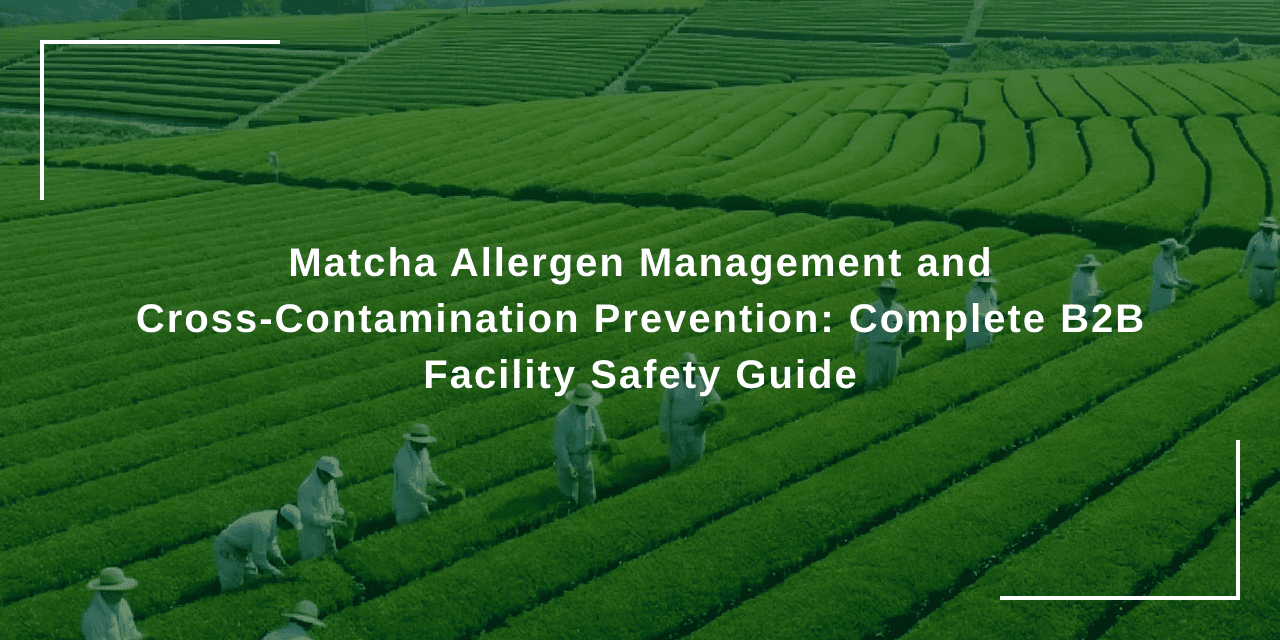
Supplier Audits: Annual on-site evaluations of matcha suppliers' allergen management systems, including Japanese tea gardens and processing facilities. Focus on shared equipment usage, cleaning protocols, and testing procedures.
Certificate of Analysis Requirements: Each matcha shipment must include allergen testing results with detection limits below 3 ppm for major allergens. Reject loads lacking proper documentation or showing positive test results.
Incoming Inspection Protocols: Visual inspection of packaging integrity, verification of lot coding and traceability information, and random sampling for allergen testing using validated methods.
Continuous Improvement and Performance Monitoring
Effective allergen management requires ongoing evaluation and improvement. Key performance indicators include:
- Environmental monitoring trends showing decreasing contamination over time
- Training effectiveness measured through practical assessments and incident rates
- Customer complaint analysis related to allergen concerns
- Regulatory compliance metrics and audit performance
Monthly management reviews should evaluate these metrics and identify improvement opportunities. Benchmark performance against industry standards and implement best practices from other successful operations.
Implementing Your Matcha Safety Program
Effective matcha allergen management requires commitment to comprehensive safety protocols, proper facility design, and ongoing staff education. The investment in robust prevention systems protects both consumers and business continuity while ensuring regulatory compliance in an increasingly scrutinized industry.
Partner with suppliers who understand these critical safety requirements and can provide consistent, traceable matcha products that support your allergen management goals. First Agri's direct-from-Japan sourcing ensures complete supply chain transparency and adherence to the highest safety standards. Our matcha undergoes rigorous testing and comes with comprehensive documentation to support your facility's allergen management program. Request samples and detailed safety documentation to experience the difference that proper sourcing makes in your food safety compliance efforts.