Managing matcha supply chains requires a deep understanding of Japanese production cycles, seasonal constraints, and the unique characteristics of this premium agricultural product. For commercial operators—whether you're running a specialty cafe, manufacturing matcha-infused products, or supplying the growing beverage market—mastering matcha lead times and production scheduling can mean the difference between consistent operations and costly stockouts.
Unlike commodity agricultural products, matcha operates on rigid seasonal cycles tied to traditional Japanese farming practices, weather patterns, and artisanal processing methods that have remained largely unchanged for centuries. This creates both opportunities and challenges for international buyers seeking reliable supply partnerships with Japanese suppliers.
Understanding Japanese Matcha Production Cycles and Seasonal Constraints
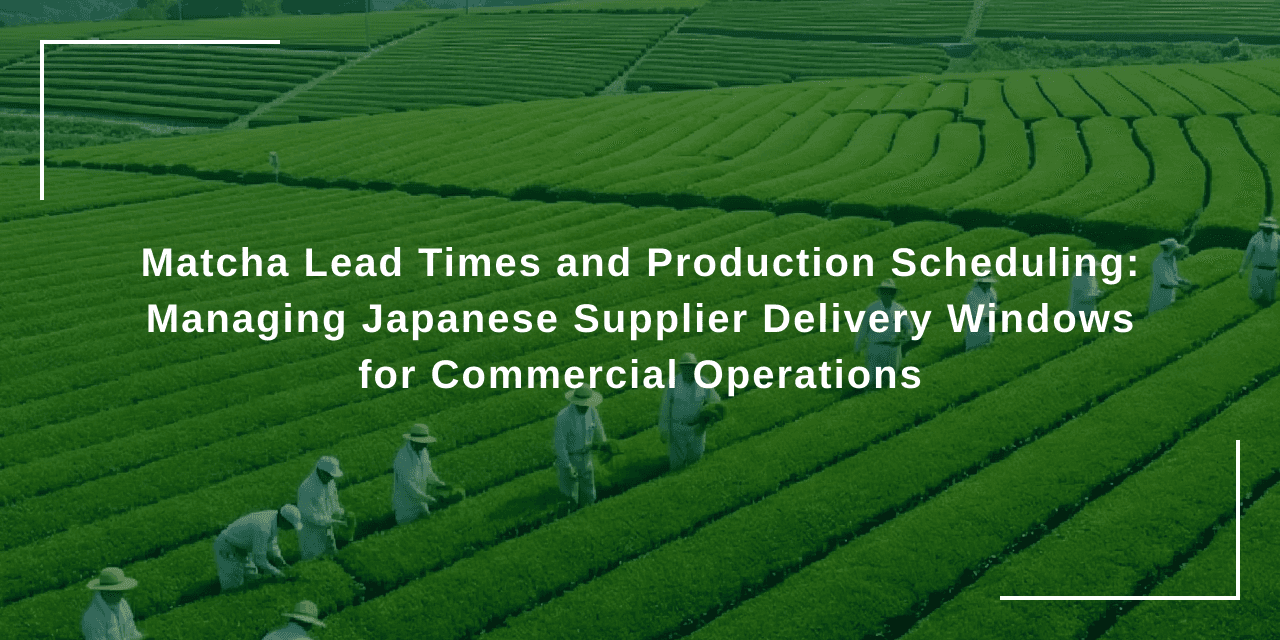
Japanese matcha production follows a highly structured annual cycle that directly impacts availability and pricing throughout the year. The primary harvest season, known as ichibancha (first flush), typically occurs between late April and early May, depending on regional weather conditions and specific tea garden locations.
During this critical 3-4 week window, tea farmers harvest the youngest, most tender leaves that have been shade-grown for 3-4 weeks prior to picking. This shading process, called kabuse, increases chlorophyll content and amino acid levels while reducing tannins—creating matcha's distinctive umami flavor profile and vibrant green color.
Following the harvest, processing facilities enter an intensive 4-6 week period where fresh leaves are steamed, dried, and stone-ground into powder. Most premium matcha suppliers complete their primary production runs between June and August, with inventory allocation decisions made during this period.
Regional Variations in Production Timing
Different matcha-producing regions in Japan operate on slightly different schedules:
- Uji (Kyoto Prefecture): Harvest typically begins in late April, with processing completed by mid-July
- Nishio (Aichi Prefecture): Harvest starts in early May, processing extends through early August
- Kagoshima: Earlier harvest beginning in mid-April due to southern climate, processing finished by late June
Understanding these regional differences allows buyers to diversify sourcing strategies and potentially access inventory during different windows throughout the production cycle.
Calculating Realistic Lead Times: From Order Placement to Delivery
Realistic matcha lead times vary significantly based on timing, order size, quality grade, and supplier relationships. Commercial buyers should plan for the following baseline timeframes:
Order Type | Minimum Lead Time | Standard Lead Time | Peak Season Lead Time |
|---|---|---|---|
Standard Grades (Existing Inventory) | 2-3 weeks | 4-6 weeks | 8-12 weeks |
Premium Grades (Limited Stock) | 4-6 weeks | 8-10 weeks | 16-20 weeks |
Custom Blends/Private Label | 8-10 weeks | 12-16 weeks | 20-24 weeks |
Ceremonial Grades (Ultra-Premium) | 6-8 weeks | 12-16 weeks | 24+ weeks |
These timeframes include order processing, production (if required), quality testing, export documentation, international shipping, and customs clearance. However, several factors can extend these timelines significantly.
Factors Affecting Lead Time Calculations
Seasonal demand fluctuations create the most significant impact on lead times. Orders placed between January and March typically experience faster processing, while orders during the September-December peak demand season face extended delays due to increased global demand.
Quality testing requirements account for 1-2 weeks of standard timelines. Japanese suppliers conduct comprehensive testing for pesticide residues, heavy metals, and microbiological contaminants before export. Additional testing for organic certification or specific customer requirements can extend this period.
Shipping and logistics constraints vary by port and destination. West Coast US deliveries average 10-14 days by sea freight, while East Coast deliveries require 16-20 days. Air freight reduces shipping time to 3-5 days but increases costs by 300-500%.
Building Procurement Calendars Around Harvest and Processing Schedules
Successful matcha production scheduling requires aligning procurement activities with Japanese agricultural and processing cycles. Commercial buyers should develop annual procurement calendars that account for both supplier constraints and their own operational requirements.
Optimal Ordering Windows
January-March: This represents the ideal ordering window for spring delivery. Suppliers have clear inventory visibility, pricing is typically stable, and processing capacity is available for custom orders. Orders placed during this period usually receive priority allocation from the upcoming harvest.
April-May: During harvest season, suppliers focus on production rather than new order processing. However, this period offers opportunities to secure early allocations of new harvest matcha, though delivery may be delayed until processing is complete.
June-August: Post-harvest processing period when fresh matcha becomes available. Lead times are moderate, but popular grades may sell out quickly. This is optimal for buyers needing fresh harvest matcha for autumn product launches.
September-December: Peak demand season with extended lead times but broadest product availability. Buyers should expect longer processing times but can access the full range of grades and custom blending services.
Strategic Procurement Planning
Commercial operators should develop 12-18 month procurement plans that segment purchases across multiple ordering windows. This approach provides several advantages:
- Reduced exposure to seasonal price fluctuations
- Improved allocation priority with key suppliers
- Better cash flow management through distributed purchasing
- Enhanced supply security through diversified timing
Managing Rush Orders and Emergency Inventory Situations
Despite careful planning, commercial operators occasionally face urgent inventory needs due to unexpected demand spikes, supply chain disruptions, or new product launches. Managing these situations requires pre-established relationships and clear protocols.
Emergency Procurement Strategies
Expedited processing arrangements: Established customers can often access expedited processing for premium fees ranging from 15-30% above standard pricing. These arrangements must be negotiated in advance and are subject to available inventory and processing capacity.
Air freight alternatives: While expensive, air freight can reduce door-to-door delivery times from 3-4 weeks to 5-7 days for urgent orders. The additional cost (typically $8-15 per kilogram) may be justified for high-value products or critical supply situations.
Alternative grade substitutions: Suppliers may offer alternative grades with similar characteristics when preferred specifications are unavailable. This requires pre-approved substitution matrices and quality parameters.
"We maintain emergency inventory agreements with three key suppliers, allowing access to 500kg of standard ceremonial grade within 10 days. This costs about 20% more than regular orders, but it's prevented two major stockouts that would have cost us significantly more in lost sales." - Operations Manager, Premium Tea Retailer
Cost Implications of Rush Orders
Emergency procurement typically carries substantial cost premiums beyond expedited processing fees. Air freight, rush documentation, and priority handling can add 40-80% to standard procurement costs. Commercial buyers should factor these potential expenses into their inventory planning and financial models.
Negotiating Delivery Terms and Penalty Clauses with Japanese Suppliers
Effective supplier relationships require clearly defined delivery terms that balance flexibility with accountability. Japanese supplier delivery agreements should address timing, quality, and contingency scenarios while respecting cultural business practices.
Essential Contract Components
Delivery windows rather than fixed dates: Japanese suppliers typically prefer delivery windows (e.g., "within 8-10 weeks") rather than specific dates due to production variables. This flexibility should be balanced with buyer operational requirements.
Force majeure provisions: Weather-related delays, natural disasters, and other uncontrollable events significantly impact agricultural supply chains. Contracts should clearly define force majeure events and procedures for handling delays.
Quality specifications and testing protocols: Detailed quality parameters, testing requirements, and acceptance criteria prevent disputes and ensure consistent product delivery. Include specific provisions for organoleptic testing, moisture content, and particle size requirements.
Penalty and Incentive Structures
While penalty clauses are less common in Japanese business culture, performance incentives can effectively encourage reliable delivery. Consider structures such as:
- Early delivery bonuses (2-5% price premium for deliveries ahead of schedule)
- Volume commitment rebates tied to delivery performance
- Preferred allocation status for customers with strong payment and forecasting records
- Graduated pricing based on order lead time (discounts for longer lead times)
Creating Buffer Inventory Strategies for Consistent Supply
Buffer inventory strategies provide insurance against supply disruptions while optimizing working capital efficiency. Commercial matcha users should develop sophisticated inventory management approaches that account for product characteristics, demand patterns, and supplier constraints.
Optimal Buffer Inventory Levels
Buffer inventory requirements vary significantly based on business type and risk tolerance:
- Cafes and food service: 60-90 days of safety stock to cover seasonal demand variations
- Food manufacturers: 90-120 days due to longer procurement cycles and production planning requirements
- Retail distributors: 120-180 days to ensure customer availability and accommodate promotional activities
Storage and Quality Preservation
Matcha's quality degrades over time, making inventory rotation critical. Proper storage requires:
- Temperature-controlled environments (below 15°C/59°F)
- Protection from light and humidity
- First-in, first-out rotation protocols
- Regular quality monitoring and testing
Well-managed matcha can maintain quality for 12-18 months when properly stored, though optimal flavor and color are best preserved within 6-9 months of production.
Financial Optimization of Buffer Inventory
Buffer inventory represents a significant working capital investment. Commercial operators should analyze the total cost of ownership, including:
- Purchase price and payment terms
- Storage and handling costs
- Insurance and quality degradation risks
- Opportunity cost of tied capital
- Stockout risk and customer impact
Many successful operations find that maintaining 90-day buffer inventory provides optimal balance between service levels and financial efficiency.
Implementation Recommendations for Commercial Success
Successfully managing matcha lead times and production scheduling requires systematic implementation of best practices:
Develop supplier partnerships: Cultivate relationships with 2-3 primary suppliers and 1-2 backup sources. Regular communication, visit schedules, and mutual business planning strengthen these critical relationships.
Implement demand forecasting: Use historical data, market trends, and promotional calendars to develop 12-month rolling forecasts. Share these forecasts with suppliers to improve their production planning.
Create procurement protocols: Establish standardized procedures for order placement, quality acceptance, and inventory management. Train team members on these protocols to ensure consistency.
Monitor key performance indicators: Track on-time delivery rates, quality rejection rates, inventory turns, and stockout incidents. Use this data to continuously improve procurement processes.
Ready to optimize your matcha supply chain with reliable Japanese suppliers? First Agri specializes in direct-from-Japan matcha sourcing with transparent lead times and consistent quality. Our established relationships with premium tea gardens ensure competitive pricing for commercial operations. Ask us which allocation options are available for your volumes. Request samples and discuss your specific procurement requirements with our experienced team today.