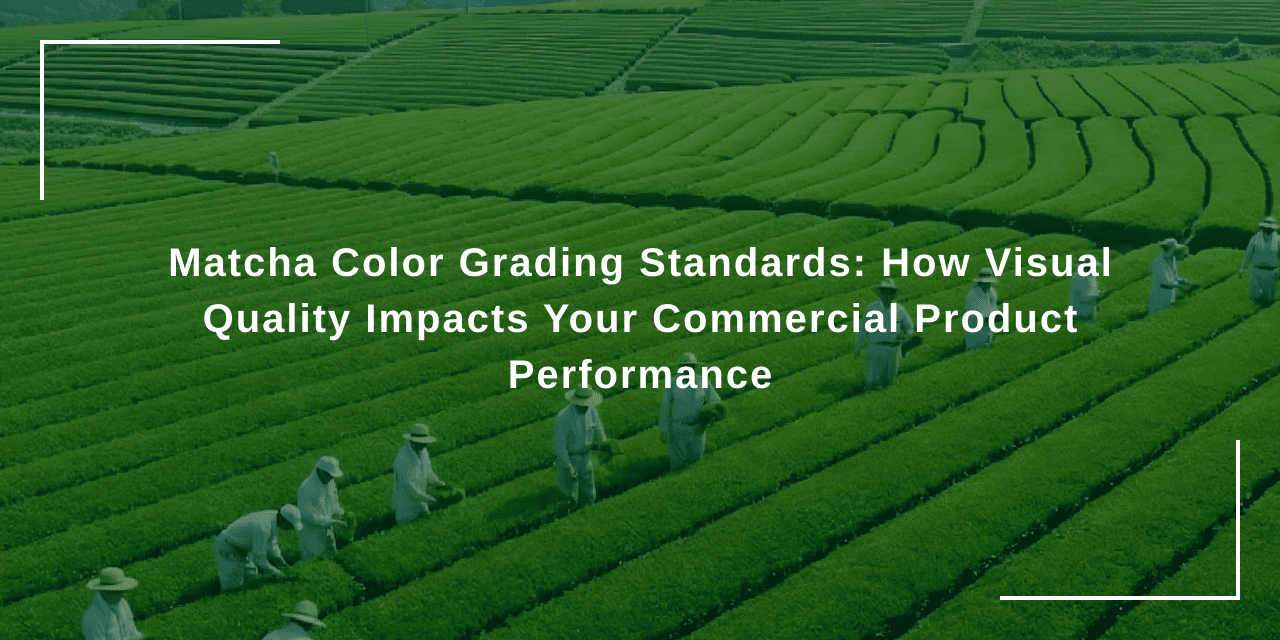
When sourcing matcha for your commercial operations, color isn't just about aesthetics—it's a critical quality indicator that directly impacts your product's market performance, customer satisfaction, and profit margins. Understanding Japan's sophisticated matcha color grading system can transform how you evaluate suppliers, optimize your product formulations, and communicate quality standards across your supply chain.
The vibrant green hue of premium matcha results from specific cultivation and processing techniques that preserve chlorophyll content while minimizing oxidation. For B2B buyers, these visual quality markers translate into tangible business outcomes: longer shelf life, consistent product appearance, enhanced flavor profiles, and ultimately, stronger brand positioning in competitive markets.
Japanese Color Classification System: Understanding the Five-Tier Grading Scale
Japan's matcha industry operates on a sophisticated five-tier color grading system that has evolved over centuries of tea cultivation expertise. This standardized approach provides B2B buyers with reliable benchmarks for quality assessment and supplier negotiations.
Grade 1: Premium Ceremonial (Deep Jade Green)
The highest grade exhibits a distinctive deep jade green color with slight blue undertones. This premium tier represents matcha harvested from first-flush tea leaves, shade-grown for 3-4 weeks before harvest. The intense color indicates maximum chlorophyll retention and minimal oxidation during processing.
Commercial characteristics: Powder remains vibrant for 12-18 months when properly stored, exhibits no browning when mixed with liquids, and provides consistent color performance across different preparation methods.
Grade 2: High-Quality Commercial (Bright Green)
This grade displays bright, uniform green coloration without the blue undertones of premium grades. While still maintaining excellent visual quality, Grade 2 matcha offers commercial buyers a balance between quality and cost-effectiveness for high-volume applications.
Commercial characteristics: Maintains color integrity for 10-12 months, performs well in both hot and cold applications, and provides reliable batch-to-batch consistency for large-scale production.
Grade 3: Standard Commercial (Medium Green)
Standard commercial grade presents medium green coloration with slight yellow undertones beginning to appear. This grade represents the sweet spot for many food service applications where visual quality remains important but cost considerations are paramount.
Commercial characteristics: Best used within 8-10 months of production, suitable for applications where matcha is blended with other ingredients, and offers competitive pricing for volume purchases.
Grade 4: Industrial (Olive Green)
Industrial grade matcha shows olive green coloration with noticeable yellow undertones. While the visual quality is lower than premium grades, this tier serves specific commercial applications where matcha flavor is desired but vibrant color is less critical.
Commercial characteristics: Cost-effective for large-scale manufacturing, suitable for baked goods where color changes during cooking, and maintains functional properties despite visual differences.
Grade 5: Culinary Basic (Yellow-Green)
The most economical grade displays yellow-green coloration, indicating higher levels of oxidation and potential age. This grade serves specific commercial niches where matcha flavor enhancement is the primary goal rather than visual impact.
Commercial characteristics: Lowest cost option, appropriate for applications with strong flavor masking, and suitable for test batches or product development phases.
Grade | Color Description | Shelf Life | Indicative cost tier | Best Applications |
|---|---|---|---|---|
Grade 1 | Deep Jade Green | 12-18 months | Premium | Premium beverages, ceremonial blends |
Grade 2 | Bright Green | 10-12 months | Upper-mid | Specialty lattes, high-end desserts |
Grade 3 | Medium Green | 8-10 months | Mid | Standard cafe beverages, ice cream |
Grade 4 | Olive Green | 6-8 months | Entry-mid | Baked goods, confectionery |
Grade 5 | Yellow-Green | 4-6 months | Entry | Industrial flavoring, test batches |
Color Grade Impact on Commercial Applications: Beverages vs Baking vs Manufacturing
Different commercial applications demand specific color grade considerations. Understanding these requirements enables strategic sourcing decisions that optimize both quality and cost efficiency across your product portfolio.
Beverage Applications: Where Visual Impact Drives Sales
In beverage applications, matcha color directly influences consumer perception and purchase decisions. Research indicates that customers associate vibrant green color with freshness, quality, and authenticity—factors that command premium pricing in competitive markets.
Cold Beverages: Iced matcha lattes, smoothies, and bubble teas require Grade 1-2 matcha to maintain visual appeal. The high chlorophyll content ensures color stability when exposed to light and prevents the unappetizing brown tint that occurs with lower grades.
Hot Beverages: Traditional matcha lattes and specialty hot drinks benefit from Grade 2-3 matcha. While heat can slightly diminish color vibrancy, starting with higher-grade matcha ensures the final product maintains acceptable visual standards.
Performance metrics for beverage applications:
- Color retention: Premium grades maintain 85-90% of original vibrancy after 4 hours of light exposure
- pH stability: Higher grades show less color shift in alkaline milk-based beverages
- Temperature resistance: Grade 1-2 matcha maintains acceptable color at serving temperatures up to 70°C
"We switched from Grade 3 to Grade 2 matcha for our signature iced drinks and saw a 23% increase in customer satisfaction scores related to product appearance. The investment paid for itself within three months through reduced waste and increased repeat purchases." - Regional Manager, Premium Coffee Chain
Baking and Confectionery: Balancing Cost and Color Performance
Baked goods present unique challenges for matcha color performance due to heat exposure, pH interactions with other ingredients, and extended processing times. Understanding these factors enables strategic grade selection that maximizes cost efficiency without compromising product quality.
White Chocolate and Confectionery: Grade 2-3 matcha performs optimally in white chocolate applications where the neutral base allows matcha color to dominate. The controlled temperature processing preserves color integrity while delivering distinctive visual appeal.
Baked Goods: Cookies, cakes, and pastries can successfully utilize Grade 3-4 matcha since baking temperatures naturally alter color appearance. The cost savings from lower-grade matcha can be substantial in high-volume operations without significantly impacting final product appearance.
Ice Cream and Frozen Desserts: Grade 2-3 matcha excels in frozen applications where temperature stability is crucial. The controlled environment preserves color integrity throughout the product lifecycle, from production through consumer consumption.
Large-Scale Manufacturing: Consistency and Cost Optimization
Manufacturing applications require careful balance between color quality, batch consistency, and cost management. Large-scale operations benefit from establishing long-term supplier relationships that guarantee color grade consistency across multiple orders.
Powder Supplements: Health and wellness products targeting premium markets require Grade 1-2 matcha to support marketing claims about quality and purity. The investment in visual quality directly supports higher retail pricing and brand positioning.
Food Ingredient Applications: When matcha serves as a flavor component rather than a visual centerpiece, Grade 4-5 options provide cost-effective solutions without compromising functional benefits.
Visual Quality Control: Testing Methods and Supplier Communication Protocols
Implementing systematic visual quality control processes protects your business from inconsistent supplier performance, reduces product waste, and ensures consistent customer experiences across your product range.
Laboratory Testing Protocols
Professional matcha evaluation requires standardized testing conditions that eliminate variables affecting color perception. Establishing these protocols creates objective benchmarks for supplier negotiations and quality assurance processes.
Controlled Lighting Assessment: Evaluate matcha samples under standardized lighting conditions using daylight-balanced LED panels (5500K-6500K color temperature). This eliminates variations caused by ambient lighting and provides consistent evaluation conditions.
Powder Preparation Standards: Create uniform powder samples by sifting through 200-mesh screens and presenting in white ceramic vessels against neutral backgrounds. This standardization enables accurate color comparison between different suppliers and batches.
Digital Color Measurement: Invest in colorimeter equipment to obtain objective color measurements using the L*a*b* color space. This provides quantifiable data for supplier specifications and quality control documentation.
Sample Evaluation Framework
Develop systematic sample evaluation processes that assess both initial quality and stability over time. This approach identifies potential issues before they impact production schedules or product quality.
Initial Quality Assessment:
- Visual inspection under standardized lighting
- Digital color measurement and documentation
- Powder texture and particle size evaluation
- Aroma assessment for oxidation indicators
Stability Testing:
- Monitor color changes over 30, 60, and 90-day periods
- Test performance in your specific application conditions
- Document temperature and light sensitivity
- Evaluate packaging effectiveness for color preservation
Supplier Communication Standards
Clear communication protocols with suppliers prevent misunderstandings, reduce quality disputes, and ensure consistent product delivery that meets your specifications.
Specification Documentation: Create detailed written specifications that include acceptable color ranges, measurement methods, and rejection criteria. This documentation serves as the foundation for supplier agreements and quality disputes resolution.
Regular Quality Reviews: Schedule quarterly quality reviews with key suppliers to discuss performance trends, address concerns, and align on upcoming requirements. These proactive discussions prevent quality issues from escalating into business disruptions.
Batch Documentation Requirements: Require suppliers to provide detailed batch information including harvest date, processing methods, storage conditions, and quality test results. This traceability enables rapid issue resolution and supports quality improvement initiatives.
Storage and Handling Best Practices
Proper storage and handling practices preserve matcha color quality throughout your supply chain, protecting your investment and ensuring consistent product performance.
Temperature Control: Store matcha at temperatures below 15°C to minimize oxidation and color degradation. Investment in proper refrigeration pays dividends through extended product life and reduced waste.
Light Protection: Use opaque containers or amber glass to prevent light-induced color loss. UV exposure can degrade chlorophyll content within hours, making light protection critical for maintaining visual quality.
Moisture Management: Maintain storage humidity below 45% RH to prevent clumping and oxidation. Moisture exposure accelerates color degradation and can create quality issues that affect multiple batches of finished products.
Understanding matcha color grading standards empowers B2B buyers to make informed sourcing decisions that balance quality requirements with cost considerations. By implementing systematic evaluation processes and maintaining clear supplier communication, your business can consistently deliver products that meet customer expectations while optimizing operational efficiency.
First Agri specializes in connecting international buyers with premium Japanese matcha suppliers who understand these quality standards and can meet your specific color grade requirements. Our direct-from-Japan sourcing eliminates intermediaries, ensuring you receive authentic products with full traceability and competitive pricing. Request samples today to experience the difference that proper color grading makes in your commercial applications.