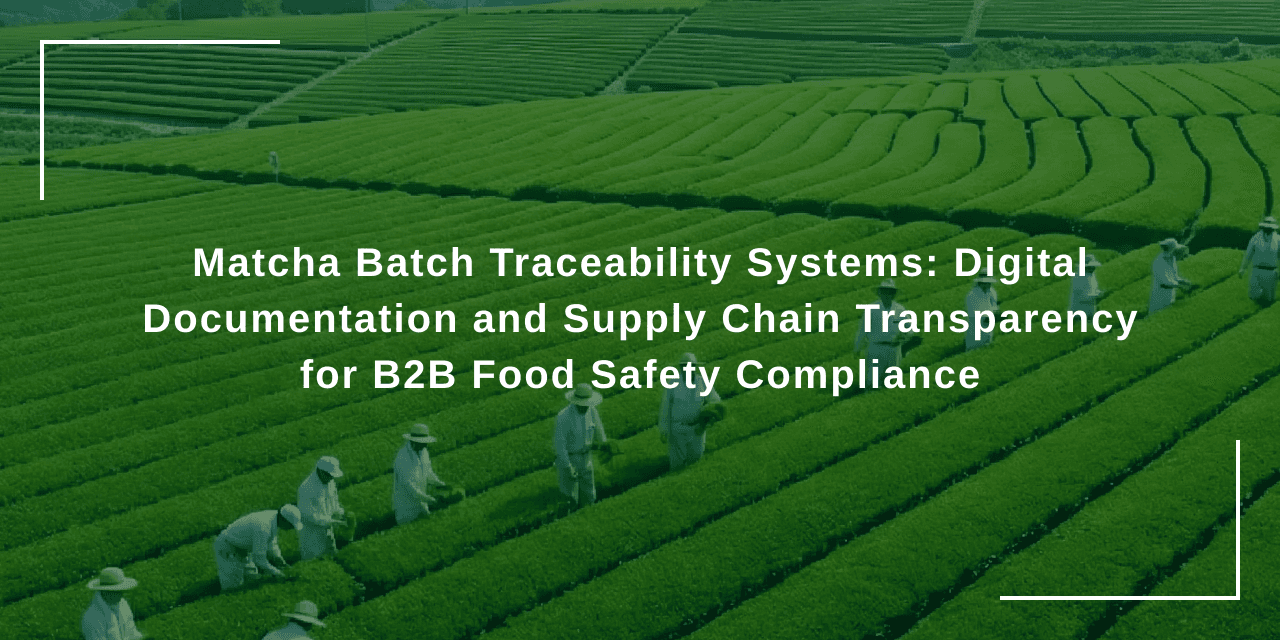
In today's food industry landscape, matcha traceability has evolved from a competitive advantage to a regulatory necessity. As global food safety standards become increasingly stringent and consumer demand for transparency grows, businesses throughout the matcha supply chain—from importers to cafes, manufacturers to distributors—must implement robust batch tracking systems to ensure compliance and protect their operations.
Recent food safety incidents have underscored the critical importance of knowing exactly where your ingredients come from, how they were processed, and where they've traveled throughout the supply chain. For matcha, a premium ingredient with complex traditional processing methods, establishing comprehensive traceability presents both unique challenges and significant opportunities for businesses that get it right.
Digital Traceability Requirements: FDA, EU, and International Food Safety Standards
The regulatory landscape for food safety compliance has transformed dramatically over the past decade. The FDA's Food Safety Modernization Act (FSMA) requires food facilities to maintain detailed records that can quickly trace the movement of food products through the supply chain. Similarly, the European Union's General Food Law mandates "one step forward, one step back" traceability, while countries like Canada, Australia, and Japan have implemented their own comprehensive tracking requirements.
For matcha specifically, these regulations mean businesses must document:
- Origin farm or producer identification in Japan
- Harvest dates and processing methods
- Transportation and storage conditions
- Import documentation and customs clearance
- Domestic distribution and lot codes
- Customer delivery records
The 24-hour rule presents perhaps the most challenging aspect of modern traceability requirements. When regulatory agencies request traceability information during an investigation, businesses have just 24 hours to provide comprehensive documentation. This timeline makes paper-based systems virtually obsolete and digital solutions essential.
International standards like ISO 22005 and BRC Global Standards further emphasize the need for robust matcha documentation systems. These frameworks require businesses to demonstrate not just what happened to their products, but when, where, and under what conditions throughout the entire supply chain.
Implementing Batch Tracking Systems: QR Codes, Blockchain, and Documentation Protocols
Modern batch tracking systems for matcha rely on three primary technological approaches, each with distinct advantages and implementation considerations.
QR Code Integration
QR codes represent the most accessible entry point for small to medium-sized businesses implementing traceability systems. Each matcha batch receives a unique QR code that links to a digital record containing all relevant information about that specific lot. When properly implemented, QR codes enable instant access to:
- Producer certifications and audit results
- Laboratory testing reports for pesticides, heavy metals, and microbiological safety
- Transportation temperature logs
- Storage facility information
- Expiration dates and handling recommendations
The key to successful QR code implementation lies in ensuring every stakeholder in the supply chain can easily scan and update information. This requires standardized protocols and training across all partners.
Blockchain Documentation
Blockchain technology offers the highest level of security and transparency for supply chain transparency, though it requires more significant investment and technical expertise. For matcha, blockchain creates an immutable record that follows the product from tea garden to final consumer.
Leading food companies have reported that blockchain systems reduce the time needed for traceability investigations from weeks to seconds. When Walmart implemented blockchain for leafy greens, they reduced tracing time from 6 days to 2.2 seconds—a transformation that could prove equally valuable for matcha suppliers during quality investigations or recalls.
Hybrid Documentation Protocols
Many successful matcha businesses implement hybrid systems that combine traditional documentation with digital enhancements. This approach typically includes:
- Physical certificates of analysis traveling with each shipment
- Digital backup systems accessible via mobile devices
- Cloud-based storage with automatic synchronization
- Integration with existing inventory management software
System Type | Implementation Cost | Setup Time | Best For | Traceability Speed |
|---|---|---|---|---|
QR Codes | $2,000-$10,000 | 2-4 weeks | Small to medium businesses | Minutes |
Blockchain | $25,000-$100,000+ | 3-6 months | Large enterprises | Seconds |
Hybrid Systems | $5,000-$25,000 | 1-2 months | Growing businesses | 5-15 minutes |
Supplier Integration: Working with Japanese Producers to Establish Traceability Standards
Establishing effective matcha traceability requires deep collaboration with Japanese tea producers, many of whom operate traditional family businesses that may be unfamiliar with international traceability requirements. Success depends on building relationships that respect traditional methods while implementing modern documentation standards.
Cultural Considerations and Communication
Japanese matcha producers often maintain detailed records of their traditional processes, but these records may not align with international regulatory requirements. Effective supplier integration requires:
- Translation of regulatory requirements into Japanese with cultural context
- Respect for traditional processing methods while adding documentation layers
- Training programs that demonstrate the value of traceability for market access
- Technology solutions that don't disrupt established workflows
Certification and Audit Protocols
Working with Japanese suppliers to establish traceability often involves helping them achieve international certifications. This process typically includes:
"The most successful matcha traceability programs we've seen involve importers who invest in long-term relationships with their Japanese partners, providing training and technology support rather than simply demanding compliance." - International Food Safety Consultant
Key certification areas include organic standards (JAS Organic, USDA Organic, EU Organic), food safety certifications (HACCP, SQF, BRC), and specialized tea industry standards that address unique aspects of matcha production.
Documentation Standardization
Creating standardized documentation protocols with Japanese suppliers requires addressing language barriers, different measurement systems, and varying technological capabilities. Successful programs typically implement:
- Bilingual documentation templates
- Digital photography requirements for key process steps
- Regular virtual audits using video technology
- Shared cloud platforms accessible from both countries
Cost-Benefit Analysis: ROI of Traceability Systems for Different Business Sizes
The return on investment for matcha traceability systems varies significantly based on business size, customer requirements, and risk tolerance. However, recent industry data suggests that comprehensive traceability systems typically pay for themselves within 18-24 months through improved efficiency, reduced liability, and enhanced market access.
Small Operations (Under $1M Annual Revenue)
Small cafes and specialty food producers often see the quickest ROI from basic traceability systems. Benefits include:
- Premium pricing opportunities: Customers pay 15-25% more for products with verified traceability
- Insurance cost reductions: Many carriers offer 10-20% discounts for documented traceability programs
- Regulatory compliance efficiency: Reduces inspection preparation time by 60-80%
- Customer trust and loyalty: Transparent sourcing information increases repeat purchase rates by approximately 30%
Medium-Sized Businesses ($1M-$10M Annual Revenue)
Medium-sized operations typically benefit from operational efficiencies and risk mitigation:
- Inventory management improvements: Real-time tracking reduces waste by 12-18%
- Supplier relationship optimization: Data-driven supplier evaluation improves quality consistency
- Market expansion opportunities: Traceability enables access to premium retail and foodservice accounts
- Crisis response capabilities: Rapid identification of affected products can save millions in recall costs
Large Enterprises ($10M+ Annual Revenue)
Large-scale operations see returns primarily through risk mitigation and operational optimization:
- Liability protection: Comprehensive traceability can reduce legal exposure by demonstrating due diligence
- Supply chain optimization: Data analytics identify bottlenecks and efficiency opportunities
- Brand protection: Rapid response capabilities protect brand value during crises
- Regulatory compliance automation: Reduces administrative costs by 40-60%
Crisis Response: Using Traceability Data for Rapid Product Recalls and Quality Investigations
When quality issues or safety concerns arise, comprehensive batch tracking systems transform potential disasters into manageable incidents. The difference between businesses that survive food safety crises and those that don't often comes down to their ability to rapidly identify affected products and communicate effectively with customers and regulators.
Rapid Response Protocols
Effective crisis response using traceability data requires pre-established protocols that can be activated immediately when issues arise. These protocols typically include:
- Automated alert systems that notify key personnel when quality parameters fall outside acceptable ranges
- Customer communication templates that can be quickly customized with specific batch information
- Regulatory reporting procedures that streamline required notifications
- Media response strategies that emphasize transparency and responsibility
Case Study Applications
Recent incidents in the specialty tea industry demonstrate the value of comprehensive traceability systems. When contamination issues affected certain Japanese tea products in 2019, companies with robust tracking systems were able to:
- Identify affected batches within hours rather than days
- Communicate precise information to customers, avoiding unnecessary panic
- Demonstrate to regulators that unaffected products could remain on shelves
- Maintain customer confidence through transparent communication
Companies without adequate traceability systems faced much broader recalls, longer market disruptions, and significantly higher costs.
Quality Investigation Benefits
Beyond crisis response, traceability data enables proactive quality management. When customers report quality issues, businesses with comprehensive tracking can:
- Quickly determine if the issue affects a single batch or multiple products
- Identify root causes by examining processing and transportation conditions
- Implement targeted corrective actions rather than broad operational changes
- Provide detailed follow-up information to affected customers
Building Customer Confidence
Perhaps most importantly, robust traceability systems help maintain customer relationships during difficult periods. When businesses can provide specific, accurate information about affected products while demonstrating comprehensive food safety measures, customers are more likely to continue their relationships and recommend the business to others.
Industry research shows that customers are 70% more likely to continue purchasing from businesses that handle quality issues transparently and professionally, compared to those that cannot provide detailed information about affected products.
Implementation Recommendations and Next Steps
Successful matcha traceability implementation requires a phased approach that balances immediate compliance needs with long-term operational goals. Start with basic documentation systems and gradually add technological enhancements as your business grows and customer requirements evolve.
Begin by evaluating your current documentation practices and identifying gaps in your traceability chain. Focus first on areas that present the highest regulatory risk or customer concern, then expand your systems to cover all aspects of your matcha supply chain.
Partner with suppliers who understand the importance of transparency and are willing to invest in shared traceability goals. This relationship-building process takes time but creates competitive advantages that justify the investment through improved quality, reduced risk, and enhanced market access.
First Agri understands the critical importance of comprehensive traceability in today's matcha market. Our direct relationships with certified Japanese producers ensure complete documentation from tea garden to your facility, with digital tracking systems that meet international regulatory requirements. Whether you're a small cafe seeking basic compliance or a large manufacturer implementing blockchain solutions, our team can provide the documentation and support your traceability program requires. Request samples today to experience the difference that comprehensive supply chain transparency makes for your matcha sourcing.