
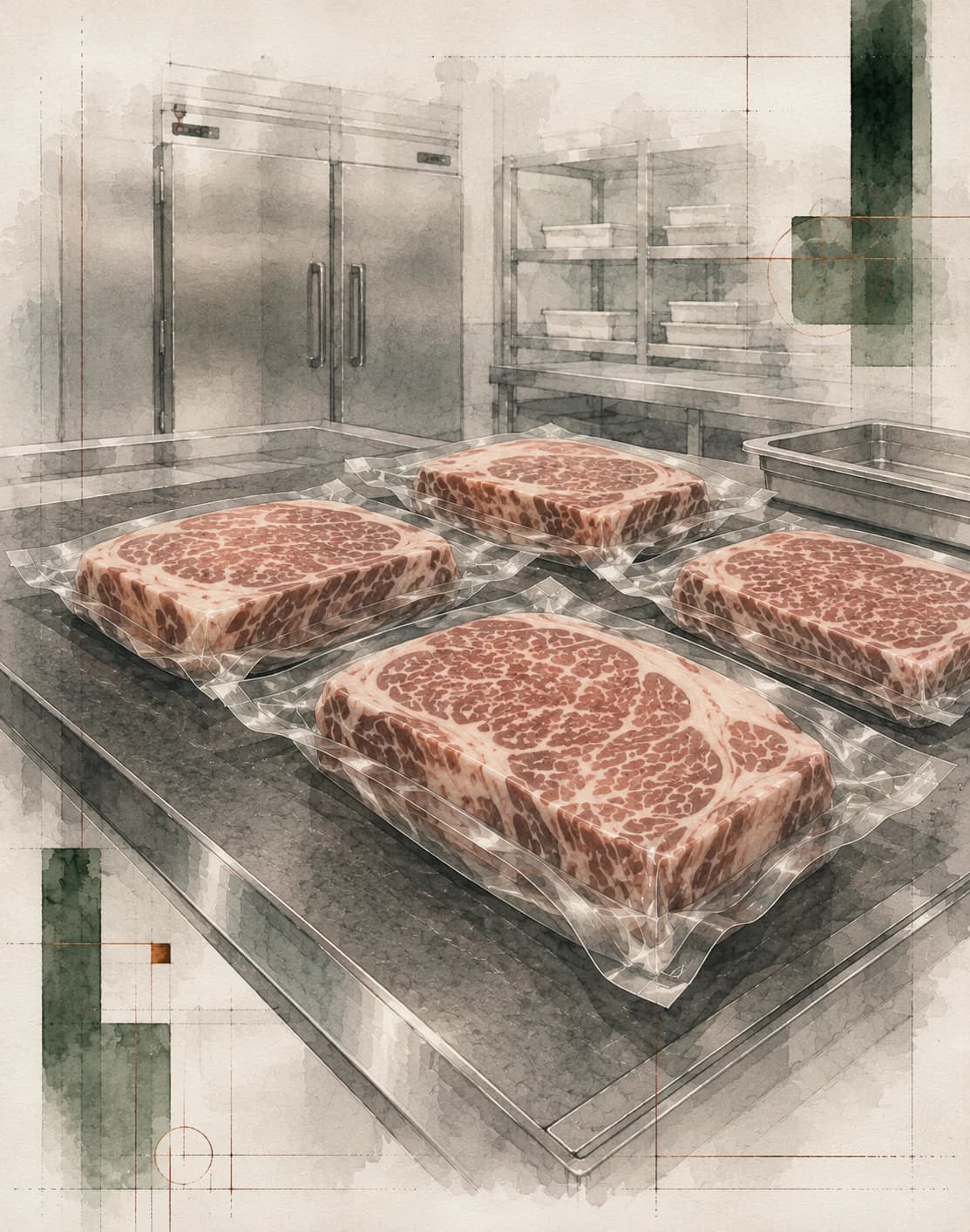
Many overseas buyers begin by asking for one famous cut, such as A5 tenderloin or ribeye. That is understandable, but Japanese Wagyu sourcing works better when the buyer understands the commercial formats available: full sets, primal or subprimal cuts, and sliced packs.
The format you choose affects MOQ, price, operational complexity, margin, and how much secondary-cut development you must do. A full-set program can lower average cost per kilogram, but only if the buyer has channels for chuck, round, brisket, trim, and sliced applications. A primal program is simpler. Sliced packs are often best for retail, e-commerce, hot pot, sukiyaki, and yakiniku.
Buyer takeaway: Most new importers should start with a focused primal or sliced-pack program, then move toward full-set economics only after they can sell non-loin cuts consistently.
The Three Main Ordering Formats
Format | Typical buyer | Strength | Main challenge |
|---|---|---|---|
Full set | Large distributor or processor | Better whole-carcass economics | Must sell every cut |
Primal or subprimal | Importer, restaurant group, specialty distributor | Easier specification and inventory control | Higher per-kg cost on popular cuts |
Sliced pack | Retail, e-commerce, hot pot, yakiniku | Ready-to-sell format | Requires clear slice spec and frozen handling |
These formats are not a hierarchy. They are tools for different business models. A distributor may use all three over time, while a fine-dining restaurant group may only need chilled or frozen primals.
Full Sets: Better Economics, Higher Responsibility
A full set means buying a broad allocation from an animal rather than selecting only the premium loin cuts. This can support better average cost, but it also transfers more merchandising responsibility to the buyer.
The buyer needs channels for steak cuts, yakiniku cuts, hot pot slices, braising cuts, trim, and value-added items. Without that plan, the attractive average price can become a storage problem. Full-set programs belong with buyers who can fabricate, portion, and sell across multiple customer types.
Primals and Subprimals: The Common Starting Point
Primal and subprimal orders let buyers specify cuts such as ribeye, striploin, tenderloin, chuck roll, brisket, or round. This is the most practical starting point for many importers because the buyer can match each cut to known customers.
The tradeoff is that high-demand cuts carry tighter supply and higher prices. If every buyer wants ribeye and tenderloin, those quotes will be more expensive and sometimes less available. A stronger program includes some non-loin cuts that fit different menu or retail applications.
Sliced Packs: Designed for Use Case, Not Just Cut Name
Sliced packs are built around the eating format. Shabu-shabu, sukiyaki, and hot pot often need thin slices, while yakiniku usually needs thicker, grillable slices. The purchase order should specify thickness, pack weight, grade, cut, frozen or chilled format, and label requirements.
For export, sliced packs are commonly frozen because thin slices have more exposed surface area and a tighter quality window. This makes them well suited to retail freezers, e-commerce bundles, Japanese restaurant programs, and distributor catalogs.
How to Specify the Order
A useful purchase specification is more detailed than "A5 Wagyu." It should include grade range, BMS preference, cut, format, pack weight, chilled or frozen state, carton configuration, document requirements, destination country, and target arrival window.
A strong RFQ also separates must-have requirements from flexible preferences. For example, a buyer may require frozen A4 striploin but remain flexible on exact BMS range, carton size, or shipping week. This gives the supplier room to propose realistic inventory rather than rejecting the request or quoting only the most expensive option.
- For steak programs: specify ribeye, striploin, tenderloin, portion size, and grade.
- For hot pot: specify thin-slice thickness, pack weight, and frozen handling.
- For distributor programs: specify whether secondary cuts are acceptable and how they will be used.
- For retail: specify label elements, barcode needs, country-of-origin wording, and shelf-life assumptions.
FAQ for B2B Buyers
Can I order only loin cuts?
Often yes, but the price and availability will reflect that demand. Buyers who can also use secondary cuts are usually better positioned commercially.
Are sliced packs always frozen?
Not always, but frozen is the practical default for long-haul export because it gives the buyer more shelf-life control and reduces waste risk.
What is the best format for a first order?
For most first-time importers, a focused primal order or a small sliced-pack program is easier to manage than a full set.
Related Wagyu Guides
- Japanese Wagyu cuts and loin economics
- Non-loin Japanese Wagyu cuts
- Wagyu for shabu-shabu, sukiyaki, hot pot, and yakiniku
- Chilled vs frozen Japanese Wagyu
- Building a distributor Wagyu program
Sources and Verification Points
Use these sources as starting points for document checks, trade planning, and supplier conversations. Current import rules, certification status, and pricing should always be confirmed before purchase.