
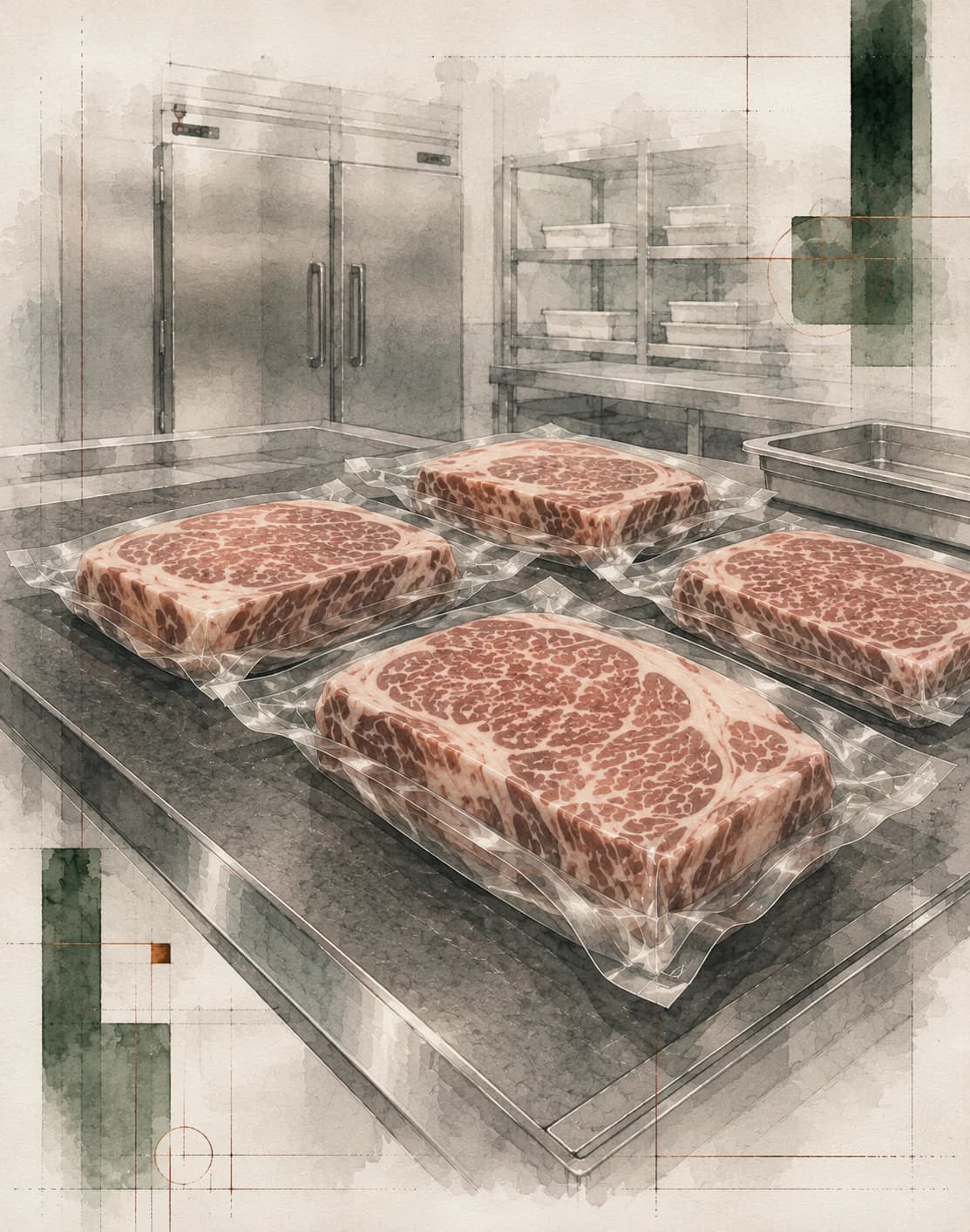
Japanese Wagyu should not be costed like conventional beef. The richness, marbling, and price structure mean that a profitable menu often uses smaller portions, sharper storytelling, and more precise preparation. A 250 g steak may be the wrong way to serve A5, even if the buyer can afford the inventory.
Foodservice buyers need a portion-cost framework before they place the order. The right program connects grade, cut, portion size, cooking method, guest expectation, and staff explanation. When those pieces work together, Wagyu becomes a margin tool and a brand signal, not just an expensive ingredient.
Buyer takeaway: Use A5 as a premium tasting or hero item, use A4 for broader steak or shared-plate revenue, and calculate every menu price from landed cost, yield, and portion weight.
Why A5 Needs Different Portion Logic
A5 Japanese Wagyu is intensely rich. Smaller portions are not a compromise; they are often the better guest experience. A tasting portion can deliver the expected luxury without overwhelming the palate or creating a plate cost that is impossible to recover.
Grade or format | Typical use | Portion logic |
|---|---|---|
A5 high BMS | Tasting menu, premium add-on | Small, precise portions |
A5 lower BMS or A4 | Shared steak, yakiniku, omakase | Moderate portions |
A4/A3 sliced | Hot pot, sukiyaki, yakiniku | Controlled slices per guest |
Secondary cuts | Braised, sliced, value-added | Margin support and menu range |
Plate Cost Formula
Start with landed cost per kilogram, not FOB cost. Then adjust for usable yield, portion weight, target food cost, and local service model. A boneless vacuum-packed subprimal may have lower trim loss than a more complex cut, but portioning skill still matters.
For example, if the usable cost after trimming is 170 dollars per kilogram, a 70 g portion costs 11.90 dollars before garnish and labor. If the restaurant targets a 30 percent food cost on that dish, the menu price needs to reflect that math. The exact numbers will differ, but the logic should be visible before launch.
A Tiered Wagyu Menu Architecture
The strongest foodservice programs usually do not rely on one SKU. A tiered structure lets the restaurant serve different guest occasions and protect margin.
- Hero item: A5 small portion for prestige, tasting menus, or social-media value.
- Volume item: A4 steak, shared plate, or yakiniku set that can sell repeatedly.
- Entry item: Wagyu bite, slider, tartare, rice dish, or add-on that introduces first-time guests.
- Operational item: secondary cuts for hot pot, braise, staff meal, or limited specials.
Staff Training Is Part of the Margin
A high Wagyu price needs explanation. Staff should be able to explain Japanese origin, grade, BMS, region, cut, portion size, and why the serving is smaller than a conventional steak. If servers cannot explain the value, the menu will feel expensive rather than intentional.
Distributors can support this by providing account training, grade cheat sheets, cooking guidance, and traceability talking points. For restaurant groups, this training should be part of the launch plan, not an afterthought.
The training should also include what not to say. Staff should avoid promising that every A5 product tastes the same, claiming a regional brand without proof, or describing Wagyu as simply the most expensive beef. The better story is specific: Japanese origin, grade, cut, portion design, and why the serving style suits the product.
Operational Details That Protect Quality
Slow thawing, controlled portioning, correct rest time, and accurate cooking are not small details with Japanese Wagyu. Poor handling can turn a premium ingredient into a greasy or inconsistent dish. The kitchen should define standard portions, plating method, cooking temperature, and waste control before service begins.
For multi-unit groups, the launch SOP should be written centrally and tested in one or two locations before a wider rollout. That protects consistency and gives procurement better data on actual yield, portion compliance, and repeat purchase behavior.
FAQ for B2B Buyers
How much A5 Wagyu should a restaurant serve per person?
Many concepts use small tasting portions rather than conventional steak portions. The right amount depends on BMS, menu format, and guest expectation, but smaller portions are often commercially and sensorially stronger.
Is A4 better for volume menus?
Often yes. A4 can support a fuller steak or shared-plate experience at a more manageable cost while still communicating Japanese Wagyu quality.
Should the menu show BMS?
If the target guest understands it, BMS can add credibility. For broader audiences, A5 or A4 plus a simple explanation may work better.
Related Wagyu Guides
- Japanese Wagyu price drivers
- Ribeye, striploin, and tenderloin
- Non-loin Japanese Wagyu cuts
- Japanese Wagyu for hot pot and yakiniku
- Choosing A3, A4, or A5 by channel
Sources and Verification Points
Use these sources as starting points for document checks, trade planning, and supplier conversations. Current import rules, certification status, and pricing should always be confirmed before purchase.