The global matcha market is experiencing unprecedented growth, with demand surging 25% annually across food service and retail sectors. For B2B buyers looking to capitalize on this trend, private label matcha manufacturing offers a strategic entry point that combines market opportunity with brand control. Whether you're a cafe chain seeking signature matcha beverages or a food manufacturer developing premium products, understanding the nuances of private label versus white label manufacturing can make or break your venture.
Next step: If you are planning a private-label matcha product, request samples or a wholesale quote from First Agri.
This comprehensive guide examines every aspect of matcha private labeling, from sourcing authentic Japanese producers to maximizing profit margins. We'll explore real-world cost structures, regulatory requirements, and the critical quality factors that separate successful matcha brands from market failures.
Understanding Private Label vs White Label Matcha Manufacturing Options
The distinction between private label and white label matcha manufacturing significantly impacts your product development strategy, costs, and market positioning. Understanding these differences is crucial for making informed sourcing decisions.
Private Label Matcha Manufacturing
Private label matcha involves partnering with manufacturers to produce matcha products exclusively for your brand. You maintain complete control over product specifications, quality standards, and branding elements. The manufacturer produces according to your exact requirements, from stone-grinding specifications to packaging formats.
Key characteristics of private label arrangements include:
- Custom formulation based on your specifications
- Exclusive production runs for your brand
- Higher minimum order quantities (typically 100-500kg)
- Greater control over quality and consistency
- Higher upfront investment but better margins
White Label Matcha Manufacturing
White label matcha manufacturing involves purchasing pre-made products from manufacturers who produce standardized formulations for multiple brands. The manufacturer maintains inventory of finished products that you can brand and package under your label.
White label benefits include:
One trade-off to understand before choosing white label: the formulation belongs to the manufacturer, and the same product is typically sold to multiple brands simultaneously — there is no exclusivity. If you later switch suppliers, you cannot take the product with you; matching it means starting over with a new manufacturer. This is acceptable for market testing, but brands whose positioning depends on a distinctive product should plan the transition to private label from the outset.
Benefits in detail:
- Lower minimum order quantities (often 10-50kg)
- Faster time to market
- Reduced upfront investment
- Proven formulations and quality consistency
- Lower risk for market testing
Hybrid Approaches and Custom Solutions
Many successful matcha brands utilize hybrid approaches, starting with white label products for market validation before transitioning to private label for signature products. This strategy allows businesses to test market demand while building capital for larger private label investments.
"We started with white label ceremonial grade matcha for our cafe chain, then developed private label culinary blends once we understood our customers' preferences. This approach reduced our initial investment by 60% while maintaining quality standards." - Regional Cafe Chain Operations Director
Finding and Vetting Japanese Private Label Matcha Manufacturers
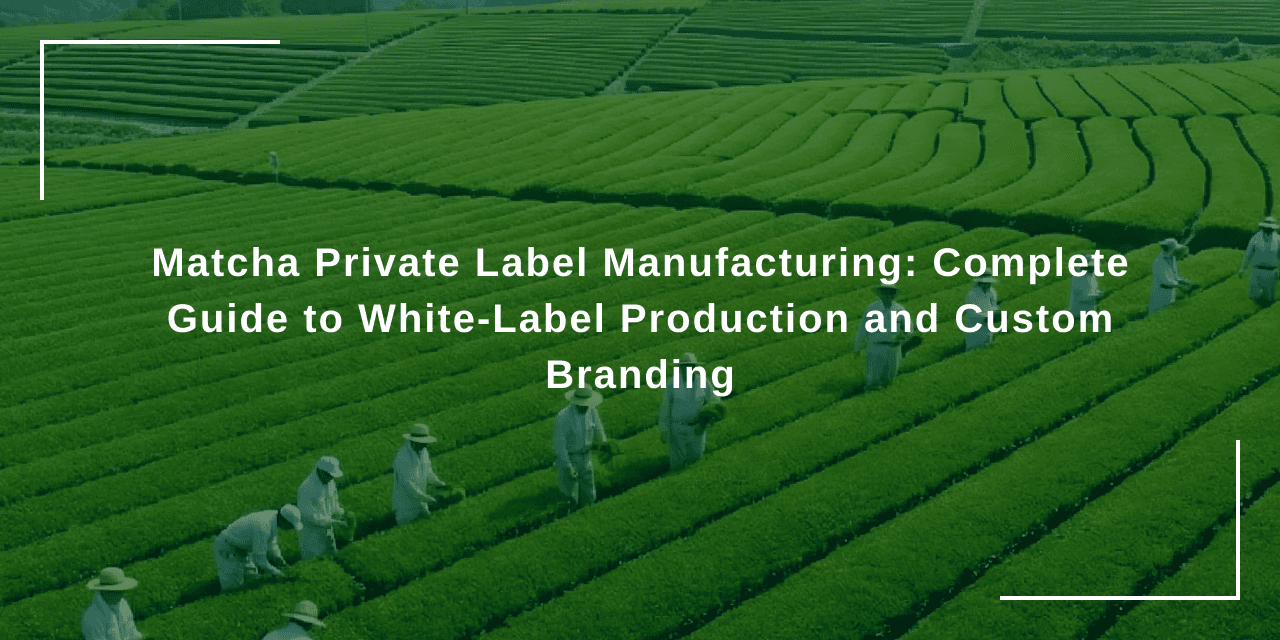
Sourcing authentic, high-quality matcha manufacturers in Japan requires understanding the complex network of tea farms, processing facilities, and export capabilities. The matcha supply chain involves multiple specialized players, each contributing to final product quality.
Types of Japanese Matcha Manufacturers
Integrated Tea Companies: Large operations controlling the entire supply chain from cultivation to export. These manufacturers offer consistent quality, reliable supply, and comprehensive certifications but may have higher minimums and less flexibility for customization.
Regional Cooperatives: Farmer-owned organizations pooling resources for processing and marketing. They typically offer competitive pricing and authentic regional varieties but may have limited export experience and language barriers.
Specialized Export Processors: Companies focused exclusively on international markets, offering bilingual support, international certifications, and flexible packaging options. They often source from multiple farms to ensure consistent supply.
Critical Vetting Criteria
When evaluating potential manufacturing partners, prioritize these essential factors:
Certification and Compliance: Verify JAS Organic certification for organic products, HACCP implementation, and FDA facility registration for US exports. Request recent third-party audit reports and contamination testing results.
Quality Control Systems: Examine their color grading standards, particle size consistency, and storage conditions. Premium manufacturers maintain cold storage throughout processing and use nitrogen flushing for packaging.
Traceability Documentation: Authentic Japanese manufacturers provide detailed farm origin information, harvest dates, and processing records. This documentation is crucial for regulatory compliance and marketing authenticity.
Production Capacity and Flexibility: Assess their ability to scale with your business growth and accommodate custom specifications. Review their typical lead times and seasonal production variations.
Red Flags to Avoid
Several warning signs indicate potentially problematic manufacturing partners:
- Unusually low pricing that seems too good to be true
- Inability to provide farm origin documentation
- Limited or outdated certifications
- Poor communication or delayed responses
- Reluctance to provide samples or facility information
Custom Packaging, Branding, and Regulatory Requirements for Private Label Matcha
Successful private label matcha products require careful attention to packaging technology, regulatory compliance, and branding strategies that resonate with target markets.
Packaging Considerations for Matcha Quality
Barrier Protection: Matcha's vibrant color and delicate flavor profile require protection from light, oxygen, and moisture. Multi-layer foil pouches with nitrogen flushing provide optimal protection, extending shelf life from 12 to 24 months.
Portion Control Options: Consider packaging formats that align with your business model. Food service operations often prefer 1kg bulk packaging, while retail brands focus on 30-100g consumer sizes. Individual serving packets (2-4g) command premium pricing but require specialized equipment.
Temperature Sensitivity: Premium matcha grades require refrigerated storage and temperature-controlled shipping. Factor these logistics costs into your pricing structure, particularly for direct-to-consumer sales.
Regulatory Requirements by Market
Each target market has specific regulatory requirements that impact labeling, testing, and documentation:
United States: FDA requires facility registration, nutritional labeling, and allergen declarations. Country of origin labeling is mandatory, and any health claims require substantiation. Organic matcha certified to Japan's JAS organic standard, and produced or finally processed or packaged in Japan, can be sold as organic in the US and carry the USDA Organic seal without a separate USDA certification, under the US-Japan organic equivalence arrangement. Each shipment must be associated with an NOP Import Certificate that the MAFF-accredited certifier issues before export, and the label must meet USDA organic labeling rules. The US importer, and any operation that repacks or relabels the powder under your brand, must hold USDA organic certification.
European Union: Novel food regulations may apply to certain matcha applications. Detailed ingredient declarations, allergen warnings, and EU organic certification are required. Brexit has created additional complications for UK imports.
Canada: Health Canada requires bilingual labeling (English/French) and specific formatting for nutritional information. Import permits may be required depending on product claims.
Branding Strategy for Private Label Matcha
Effective matcha branding balances authenticity with market positioning. Research indicates that consumers associate premium matcha with Japanese origin, traditional processing methods, and vibrant green color.
Key branding elements include:
- Clear grade designation (ceremonial, premium, culinary)
- Harvest region and seasonal information
- Traditional processing method descriptions
- Preparation instructions and serving suggestions
- Quality certifications and origin verification
Cost Analysis and Profit Margins for Private Label Matcha Products
Understanding the complete cost structure of private label matcha operations enables accurate pricing strategies and realistic profit projections. Costs vary significantly based on quality grades, order volumes, and packaging specifications.
Comprehensive Cost Breakdown
Cost Component | Ceremonial Grade (%) | Premium Grade (%) | Culinary Grade (%) |
|---|---|---|---|
Raw Material | 65-75% | 50-60% | 35-45% |
Processing & Labor | 8-12% | 12-18% | 15-25% |
Packaging Materials | 5-8% | 8-12% | 12-18% |
Shipping & Logistics | 3-5% | 5-8% | 8-12% |
Testing & Compliance | 2-3% | 3-4% | 3-5% |
Import Duties & Fees | 2-3% | 3-4% | 4-6% |
Launch Costs and Timeline
Beyond per-kilogram product cost, budget a one-time artwork and label printing setup of roughly USD 800–2,500 per SKU when working directly with Japanese manufacturers; suppliers often absorb this fee into unit pricing once volumes pass approximately 500kg per month. On timeline, a white label program typically reaches shelf in 6–12 weeks from supplier shortlist — covering sampling, artwork approval, first production run, freight, and customs — while custom private label formulations run 10–16 weeks or longer once blend development rounds are included. Plan launch dates and cash flow against these full windows rather than supplier lead-time quotes alone, which usually cover only the production step.
Volume Economics and MOQ Impact
Order volume significantly affects unit costs through economies of scale. Private label manufacturers typically require minimum orders of 100kg for custom formulations, but cost advantages continue scaling to 500kg+ orders.
Small Volume (100-200kg): Expect 15-25% higher unit costs compared to optimal volumes. Suitable for market testing and initial product launches.
Medium Volume (300-500kg): Optimal balance of cost efficiency and inventory management. Most established businesses operate in this range.
Large Volume (1000kg+): Maximum cost efficiency but requires significant capital investment and sophisticated inventory management.
Profit Margin Analysis by Channel
Distribution channel selection dramatically impacts profit potential and operational requirements:
Food Service (B2B): Gross margins typically range from 40-60% with higher volume, predictable orders. Lower marketing costs but extended payment terms.
Retail Distribution: Gross margins of 50-70% but require significant marketing investment, trade promotions, and inventory management.
Direct-to-Consumer: Highest margins (60-80%) but substantial fulfillment costs, customer acquisition expenses, and seasonal demand variations.
Hidden Costs and Risk Factors
Several often-overlooked expenses can significantly impact profitability:
- Inventory Financing: Premium matcha requires refrigerated storage, increasing carrying costs by 20-30%
- Quality Degradation: Budget 2-3% for product that doesn't meet quality standards after extended storage
- Seasonal Price Variations: Japanese matcha prices fluctuate 15-25% based on harvest quality and yield
- Currency Exchange Risk: USD/JPY volatility can impact costs by 10-15% over contract periods
Optimizing Profitability
Successful private label matcha businesses implement several strategies to maximize margins:
Portfolio Approach: Balance high-margin ceremonial grades with volume-driving culinary products. Most profitable operations derive 60% of revenue from premium grades.
Seasonal Procurement: Purchase during post-harvest periods (June-August) when prices are typically 10-15% lower than peak demand periods.
Value-Added Processing: Consider flavored blends, instant formulations, or ready-to-drink products that command premium pricing while utilizing lower-grade base materials.
The private label matcha market offers substantial opportunities for businesses willing to invest in quality partnerships and thorough market understanding. Success requires balancing authenticity with commercial viability, managing complex supply chains, and maintaining consistent quality standards that justify premium pricing.
Ready to explore private label matcha opportunities for your business? First Agri specializes in connecting B2B buyers with premium Japanese matcha manufacturers through our direct-from-source network. Our experienced team helps navigate quality specifications, regulatory requirements, and custom packaging solutions tailored to your market needs. Request samples and consultation to discover how authentic Japanese matcha can differentiate your product portfolio and drive profitable growth.