Understanding the intricate timing of matcha procurement can mean the difference between securing premium-grade tea at optimal prices and facing supply shortages or inflated costs. For B2B buyers in the global food and beverage industry, aligning procurement strategies with Japanese harvest cycles and market dynamics is essential for maintaining consistent quality while maximizing profitability.
Japan's matcha production follows centuries-old seasonal patterns that directly impact availability, quality grades, and pricing throughout the year. By mastering these cycles, businesses can optimize their purchasing decisions, reduce costs, and ensure uninterrupted supply chains.
Japanese Matcha Harvest Calendar: First Flush vs Late Season Quality and Availability
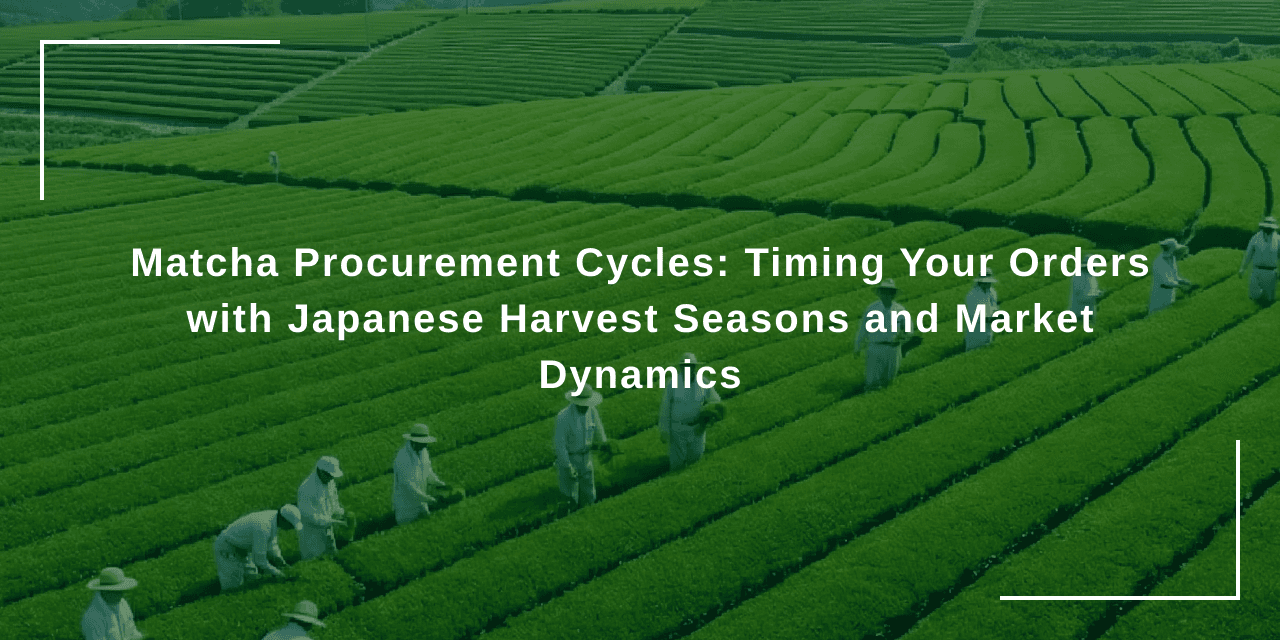
Japan's tea cultivation operates on a precise seasonal schedule that varies by region but follows predictable patterns across the country's primary growing areas: Uji, Nishio, and Kagoshima. Understanding this calendar is crucial for strategic procurement planning.
First Flush (Ichibancha) - April to May
The first flush represents the pinnacle of Japanese tea quality, occurring when tea plants emerge from winter dormancy with concentrated nutrients and minimal environmental stress. First flush matcha commands premium prices but offers superior flavor profiles that justify the investment for high-end applications.
Key characteristics of first flush matcha include:
- Vibrant green color due to high chlorophyll concentration
- Sweet, umami-rich flavor with minimal bitterness
- Fine particle size and smooth texture
- Limited availability creating immediate market demand
- Price premiums of 40-60% above late-season grades
For businesses requiring ceremonial-grade matcha or premium product lines, securing first flush inventory should begin with pre-season contracts in February and March. The harvest window is brief – typically 3-4 weeks – making timing critical.
Second Flush (Nibancha) - June to July
Second flush matcha offers a balanced compromise between quality and cost-effectiveness. While lacking the intense sweetness of first flush, it maintains good color retention and flavor complexity suitable for most commercial applications.
Second flush represents the sweet spot for volume buyers seeking consistent quality without premium pricing. Availability increases significantly during this period, allowing for larger order quantities and more flexible procurement timing.
Third Flush and Beyond - August to October
Later harvests provide cost-effective options for industrial applications, ingredient use, and price-sensitive product lines. While flavor profiles become more astringent and colors less vibrant, these grades serve essential roles in commercial food production.
Late-season matcha works particularly well for:
- Baked goods where other ingredients balance flavor
- Ice cream and frozen dessert applications
- Large-volume beverage production
- Private label products with competitive pricing requirements
Seasonal Pricing Patterns: When to Lock in Contracts for Maximum Savings
Matcha pricing follows predictable seasonal fluctuations driven by supply availability, quality variations, and global demand cycles. Understanding these patterns enables strategic contract timing that can reduce procurement costs by 15-25% annually.
Period | Price Level | Quality Availability | Procurement Strategy |
|---|---|---|---|
January-March | Moderate to High | Previous year inventory | Pre-season contracting for Q2 delivery |
April-May | Peak Premium | First flush, highest quality | Immediate purchase for premium lines |
June-August | Stabilizing | Good commercial grades | Volume purchasing for annual needs |
September-November | Lowest annual | Lower grades, high volume | Stock building for Q1 demand |
December | Rising | Limited fresh inventory | Spot purchasing only |
Optimal Contract Timing Strategies
February Pre-Season Contracts: Securing agreements before the harvest season begins offers several advantages. Suppliers are motivated to confirm sales, providing leverage for favorable pricing. Additionally, guaranteed allocations protect against supply shortages during peak demand periods.
September-November Volume Purchasing: The post-harvest period represents the year's best opportunity for cost-effective procurement. Suppliers have maximum inventory levels and face pressure to move product before the year-end. This period typically offers 20-30% savings compared to spring pricing.
Rolling Contract Strategies: Sophisticated buyers implement rolling 6-month contracts that capture seasonal pricing advantages while maintaining supply security. This approach involves purchasing 40% of annual needs during the low-cost autumn period, 35% during mid-season, and 25% for premium requirements during first flush.
Procurement Strategy Framework: Aligning Orders with Harvest Cycles and Business Demand
Successful matcha procurement requires balancing Japanese supply cycles with your business's demand patterns, cash flow considerations, and storage capabilities. A systematic framework helps optimize these competing requirements.
Demand Analysis and Forecasting
Begin procurement planning by analyzing historical consumption patterns and projected growth. Matcha demand typically peaks during spring and summer months in Western markets, coinciding with Japanese harvest seasons. However, growing year-round consumption driven by health trends and diverse applications has smoothed seasonal demand fluctuations.
Key factors to consider in demand forecasting:
- Seasonal menu variations and product launches
- Marketing campaign timing and promotional activities
- Regional market growth projections
- New product development timelines
- Competitive landscape changes affecting market share
Quality Grade Allocation Strategy
Different applications require specific quality grades, and optimal procurement involves matching purchase timing with grade availability. Premium ceremonial grades should be sourced during first flush, while culinary grades can be procured more flexibly throughout the harvest season.
"The key to effective matcha procurement is understanding that not all applications require the same quality grade. A strategic mix allows businesses to optimize both cost and quality across their product portfolio." - Senior Procurement Manager, Major Food Manufacturer
Storage and Inventory Management
Matcha's shelf life and storage requirements significantly impact procurement strategy. Properly stored matcha maintains quality for 12-18 months, but optimal freshness occurs within 6-9 months of production. This timeline allows for strategic purchasing during favorable pricing periods while maintaining quality standards.
Storage considerations include:
- Temperature-controlled environments (below 20°C/68°F)
- Protection from light and humidity
- Proper packaging to prevent oxidation
- First-in-first-out inventory rotation
- Regular quality testing protocols
Financial Planning and Cash Flow Optimization
Seasonal pricing patterns create opportunities for significant cost savings, but require careful cash flow management. Businesses should evaluate their financial capacity to take advantage of bulk purchasing opportunities during low-price periods.
Payment term negotiations become crucial during harvest seasons. Many suppliers offer extended payment terms for large orders placed during peak production periods, allowing buyers to secure favorable pricing without immediate cash flow impact.
Risk Management: Avoiding Supply Gaps During Off-Season Periods
Supply chain disruptions can occur due to weather events, political factors, or unexpected demand spikes. Effective risk management ensures business continuity regardless of external challenges.
Weather and Climate Risk Assessment
Japanese tea production faces increasing climate variability that can impact harvest timing and quality. Recent years have seen spring frost events in Shizuoka and excessive rainfall in Kyushu that disrupted normal production schedules.
Risk mitigation strategies include:
- Diversifying supplier base across different growing regions
- Maintaining safety stock levels of 2-3 months consumption
- Establishing relationships with multiple grade suppliers
- Monitoring weather forecasts during critical growing periods
Currency and Economic Risk Management
Yen fluctuations can significantly impact matcha pricing for international buyers. The Japanese yen's volatility against major currencies creates both opportunities and risks that require active management.
Currency hedging strategies should be considered for large procurement contracts, particularly when locking in favorable pricing during low-demand periods. Forward contracts can protect against adverse exchange rate movements while preserving the benefits of seasonal pricing advantages.
Supplier Relationship Management
Strong relationships with Japanese suppliers provide crucial advantages during supply shortages or quality issues. Long-term partnerships often result in preferential allocation during tight supply periods and access to higher-grade inventory.
Building effective supplier relationships involves:
- Regular communication beyond transactional needs
- Understanding suppliers' production capabilities and constraints
- Providing accurate demand forecasts to support production planning
- Prompt payment and professional business practices
- Visiting production facilities when possible
Alternative Sourcing Strategies
While Japan remains the gold standard for matcha quality, developing relationships with alternative sources can provide backup options during supply disruptions. Chinese matcha production has improved significantly and can serve as a secondary source for certain applications, though quality differences must be carefully evaluated.
Contingency planning should include:
- Qualification of alternative suppliers for each quality grade
- Regular testing of backup sources to monitor quality development
- Understanding regulatory and labeling implications of source changes
- Customer communication strategies if source substitutions become necessary
Implementation Timeline and Best Practices
Successful implementation of seasonal procurement strategies requires systematic planning and execution. The optimal annual cycle begins with harvest planning in December and January, followed by contract negotiations, delivery coordination, and continuous market monitoring.
December-January: Conduct annual demand planning and budget allocation. Begin preliminary discussions with suppliers about upcoming harvest expectations and pricing trends.
February-March: Finalize pre-season contracts for premium grade requirements. Negotiate payment terms and delivery schedules aligned with cash flow planning.
April-May: Execute first flush purchases and monitor harvest quality reports. Adjust procurement strategies based on actual harvest conditions and early quality assessments.
June-August: Focus on volume purchasing for commercial grades. Take advantage of increased availability to build inventory for peak demand periods.
September-November: Implement cost-optimization strategies through bulk purchasing of lower grades. Evaluate annual procurement performance and plan for the following year.
Mastering matcha procurement timing requires expertise, market knowledge, and reliable supplier relationships. First Agri's direct partnerships with Japanese tea gardens and deep understanding of seasonal market dynamics help businesses optimize their procurement strategies while ensuring consistent quality and supply security. Our team provides real-time market insights, flexible contract terms, and quality assurance that supports your business objectives throughout the year. Request samples to experience the quality difference that comes from properly timed, expertly sourced matcha procurement.